Home Maintenance · NW Metro Atlanta
Keeping a lawn and landscape healthy through a Georgia summer comes down to a few fundamentals: water deeply and less often rather than lightly every day, mow at the right height for your grass type, mulch beds to hold moisture, and work with the warm-season grasses that actually thrive in this heat. Georgia summers are hot and humid with stretches of drought punctuated by heavy storms, and the yards that stay green and healthy are the ones cared for to suit that climate rather than fought against it. A little knowledge about your specific grass and a consistent routine go a long way.
Here is a practical, season-specific guide for lawns and landscapes across NW Metro Atlanta, plus the water-wise habits that keep a yard healthy without waste.
Key Takeaways
- Water deeply and less often to encourage strong roots, ideally in the early morning.
- Mow at the correct height for your grass type and never cut too much at once.
- Warm-season grasses thrive in Georgia heat; know which you have.
- Mulch beds to retain moisture, suppress weeds, and protect roots.
- Adjust to local watering guidance and choose drought-tolerant plantings where you can.
How should you water in summer?
Watering is where most summer lawn problems start, and the fix is usually about technique, not quantity. The goal is deep roots, which come from deep, infrequent watering rather than frequent light sprinkling.
- Water deeply, less often: a good soaking a couple of times a week encourages deep roots far better than a little every day, which keeps roots shallow and vulnerable.
- Water early: early morning watering reduces evaporation and lets blades dry during the day, which helps prevent disease in humid conditions.
- Watch the lawn, not just the calendar: grass that holds a footprint or turns dull is telling you it needs water.
- Avoid evening watering: water sitting on blades overnight can encourage fungus in humid weather.
- Check your irrigation: confirm coverage, fix misdirected or broken heads, and avoid watering pavement.
Local watering guidance and any seasonal restrictions can apply in Georgia, so confirm current rules with your county or water provider and work within them. Efficient watering is better for the lawn and the bill alike.
How should you mow through the heat?
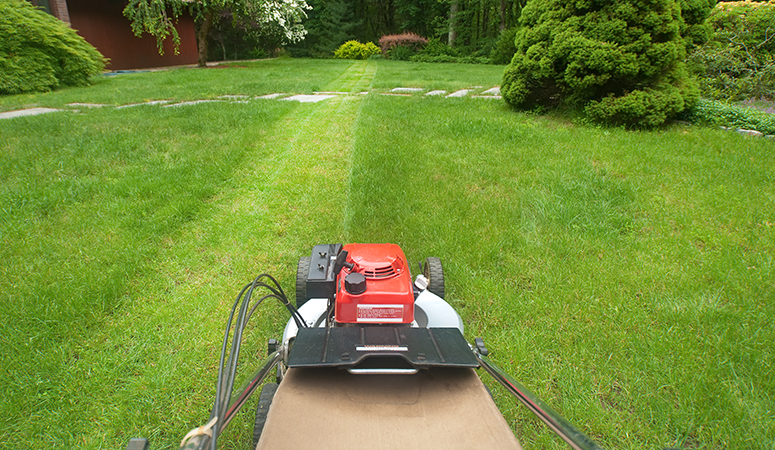
Mowing habits matter as much as watering, and summer is when bad ones do the most damage. The single most important rule is height: cutting too short stresses grass and exposes soil, while the right height shades roots and holds moisture.
- Mow at the right height: each grass type has an ideal range; in summer, leaning toward the taller end of that range helps the lawn tolerate heat.
- Follow the one-third rule: never remove more than about a third of the blade in one mowing.
- Keep blades sharp: a sharp blade cuts cleanly; a dull one tears grass and invites stress and disease.
- Leave the clippings: grasscycling returns nutrients and moisture to the lawn.
- Mow when it is cooler: avoid the hottest part of the day to reduce stress on the grass and on you.
Knowing your grass type drives these decisions, which is why it is the next thing to sort out.
What grass and plantings suit Georgia summers?
NW Metro Atlanta lawns are typically warm-season grasses, which love the heat and go dormant in cooler months, though some yards have cool-season grass that struggles more in peak summer. Knowing which you have shapes your whole approach. The table summarizes general tendencies; your specific lawn and a local expert are the best guide.
| Type | Summer behavior | General care note |
|---|---|---|
| Warm-season grasses | Thrive in heat, peak growth | Mow and feed in season; water deeply |
| Cool-season grasses | Stressed by peak heat | Extra care, careful watering and height |
| Beds and shrubs | Vary by plant | Mulch and water by need |
| Native/drought-tolerant | Handle heat well | Lower water once established |
How do you care for beds and trees?
The lawn gets the attention, but beds, shrubs, and trees need summer care too, and a few habits keep them healthy through heat and storms. Mulch is the single most valuable tool here.
- Mulch beds: a layer of mulch retains soil moisture, moderates temperature, and suppresses weeds; refresh it as needed but avoid piling it against trunks.
- Water by need: newly planted trees and shrubs need more consistent water than established ones; deep, occasional watering builds resilience.
- Prune thoughtfully: remove dead or damaged growth, but avoid heavy pruning that stresses plants in peak heat.
- Watch for stress and pests: wilting, discoloration, or pest damage caught early is easier to address.
- Mind storm risk: keep limbs clear of the house and remove dead wood before severe weather.
Pairing bed and tree care with your lawn routine gives the whole landscape a consistent level of attention, which is what keeps it looking its best.
How do you keep a yard water-wise and healthy?
A healthy summer landscape and responsible water use go hand in hand, especially given Georgia's drought-and-storm pattern. A few habits do most of the work: water deeply and early rather than often and late, group plants with similar water needs together, choose drought-tolerant and native plantings where you can so the yard needs less once established, and keep mulch in place to hold moisture. Improving the soil over time, so it absorbs and holds water rather than shedding it, pays off in resilience. These choices reduce waste, lower the water bill, and produce a landscape better suited to the climate, which means less struggle in the hottest stretches. For more home-care guidance, see my helpful guides.
What about feeding and seasonal timing?
Beyond water and mowing, the timing of feeding and other treatments matters, and it follows your grass type's growth cycle. Warm-season grasses do most of their growing in the heat, so summer is generally their active period, while pushing cool-season grass hard in peak heat can stress it. The key principle is to work with the grass's natural rhythm rather than against it.
A few timing notes that apply broadly: feed according to your grass type's needs and the product's guidance rather than overapplying, since too much can do more harm than good in summer heat. Address weeds and any pest or disease issues promptly, as humid Georgia summers can encourage both. Hold off on major projects like heavy aeration or renovation until the appropriate season for your grass type. And if you are unsure what your lawn needs or when, a local lawn-care professional or your county extension resources can give guidance specific to your grass and conditions. Matching your care calendar to the season is what keeps a lawn consistently healthy rather than lurching from problem to problem.
How does landscaping affect curb appeal and value?
A well-kept lawn and landscape are the first thing anyone sees, and they shape impressions of the whole property. Healthy turf, tidy beds, fresh mulch, and mature, well-maintained trees signal a cared-for home and support curb appeal, which matters whenever you sell. Neglected or struggling landscaping has the opposite effect and can drag down an otherwise strong home. You do not need an elaborate yard; consistency and health matter more than complexity. If a sale is on your horizon, the same summer routine that keeps your landscape healthy also helps the home show well. For preparing to sell, see my sellers page.
Frequently Asked Questions
How often should I water my lawn in summer?
Deeply and less often, typically a couple of good soakings a week rather than light daily watering, ideally in the early morning. Watch the lawn for signs of stress and adjust, and follow any local watering guidance.
What height should I mow in summer?
Mow at the correct height for your grass type, leaning toward the taller end of its range in summer to shade roots and hold moisture. Never remove more than about a third of the blade in one mowing.
Why is my lawn struggling in the heat?
Common causes are shallow watering, mowing too short, dull blades, or having a grass type ill-suited to peak heat. Confirm your grass type and adjust watering and mowing first; persistent problems may need a lawn-care pro.
Should I leave grass clippings on the lawn?
Generally yes. Grasscycling returns moisture and nutrients to the lawn and is good practice, as long as you are mowing regularly and not leaving heavy clumps.
How can I make my landscape more drought-tolerant?
Choose native and drought-tolerant plantings, group plants by water need, mulch beds to hold moisture, improve the soil over time, and water deeply but infrequently so roots grow deep and resilient.
Planning ahead for your home?
A healthy landscape protects your enjoyment now and your curb appeal later. Whether you are settling in or thinking about a move, I am glad to point you toward trusted local resources and help you plan your next step. Explore my helpful guides, visit my sellers page, or reach out with questions.
Marna Friedman is a licensed REALTOR® with Atlanta Communities Real Estate Brokerage serving NW Metro Atlanta. This article is general guidance, not professional landscaping or horticultural advice; consult local experts and confirm current watering rules. Information is deemed reliable but not guaranteed and is subject to change. Equal Housing Opportunity.
Check out this article next