
55+ Active Adult · NW Metro Atlanta
When comparing amenities in 55+ communities, the length of the list matters far less than how much of it is actually programmed and used. A community with a pool, a clubhouse, and a dozen active resident-run clubs will often deliver more day to day than one with a longer facility list and no one organizing anything. Across the age-restricted communities in Cherokee, Cobb, and Forsyth counties, this is the distinction I encourage buyers to test on a tour, because the brochure shows breadth and only a visit reveals depth.
Here is how the two differ, what each does to your dues, and the questions that surface the truth quickly.
Key Takeaways
- Breadth is how many amenities exist; depth is how actively they are programmed and used.
- Staffing, particularly a lifestyle or activities director, is often what converts facilities into use.
- Dues fund both the facilities and the programming, and reserves for eventual replacement.
- Amenities are rarely added after build-out, so evaluate what exists rather than what is planned.
- Visit at a time you would actually use the amenities, not on an empty weekday morning.
"An amenity list tells you what was built. The activity calendar tells you what is actually happening. If I could get every buyer to ask for one document on a tour, it would be this month's calendar, not the site plan."
Marna Friedman, REALTOR®, Atlanta Communities
What is the difference between amenity depth and breadth?
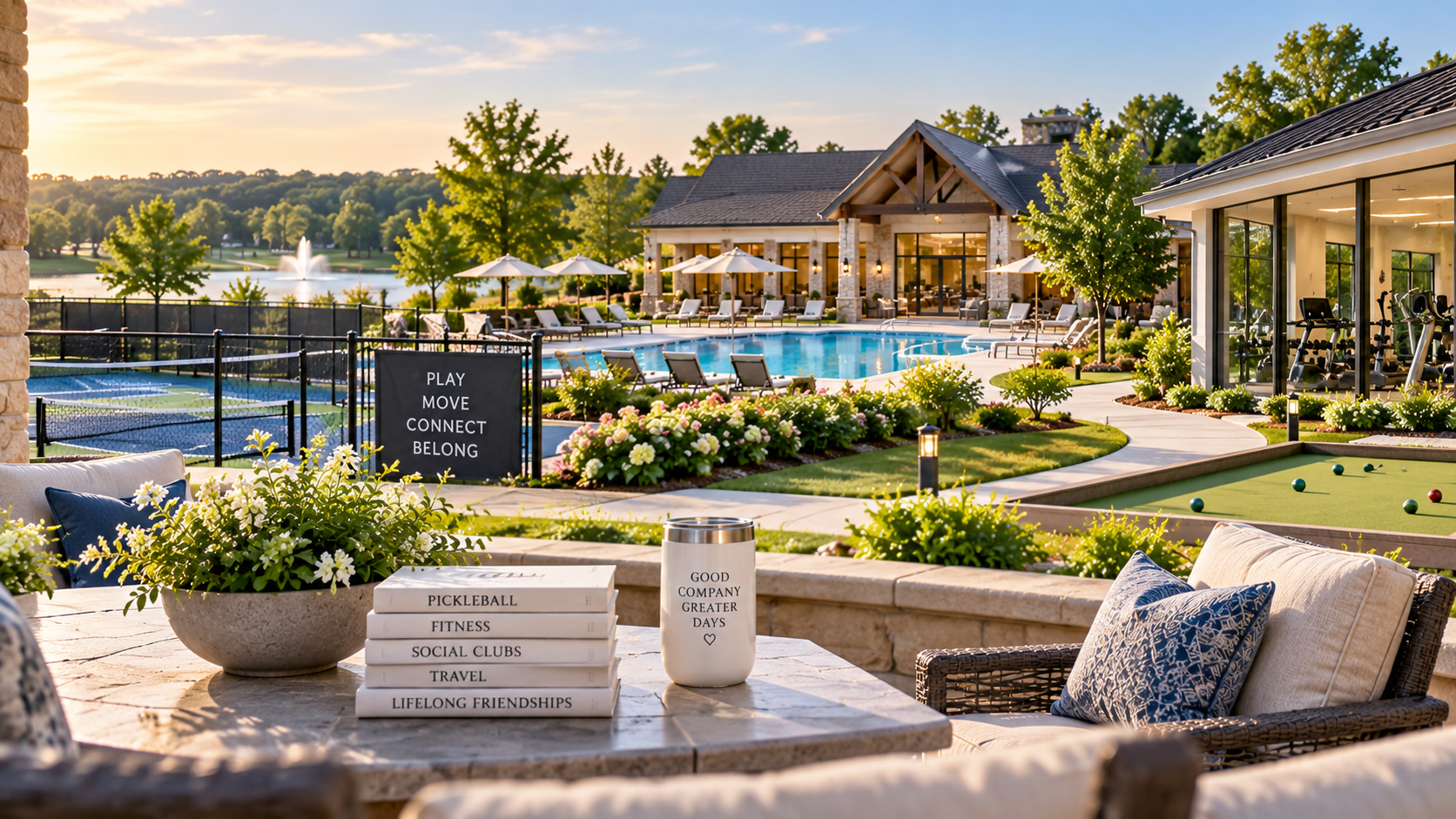
Breadth is the inventory: clubhouse, indoor and outdoor pools, fitness center, tennis and pickleball courts, walking trails, a craft or hobby room, a demonstration kitchen, gathering rooms, sometimes a golf course or a dog park. It is the list on the site plan and the part that photographs well.
Depth is what happens inside those spaces. Are there scheduled fitness classes and who leads them? Is there a standing pickleball ladder or just courts? Does the craft room have active groups with their own supply storage, or is it an empty room with tables? Are there resident-run clubs with real membership? Is the demonstration kitchen used for anything?
The reason this matters is that depth is what most people are actually buying. Someone moving into an age-restricted community is often looking for the social infrastructure as much as the low-maintenance home, and social infrastructure is built by programming and by residents, not by square footage. My page on what amenities matter most in a 55+ community covers the individual facilities, and the 55+ active adult guide covers how these communities are structured in Georgia.
What drives dues, and what are you actually funding?
Dues cover more than grounds maintenance, and the split explains a lot about what a community will feel like.
| Cost driver | Supports breadth | Supports depth |
|---|---|---|
| Facility maintenance | Yes | Indirectly |
| Lifestyle or activities director | No | Yes, substantially |
| Instructors and class fees | No | Yes |
| Reserve contributions | Yes, critical | No |
| Grounds and common areas | Yes | No |
| Golf operations, where present | Yes, significantly | Varies |
| Resident club budgets | No | Yes |
Two communities can have similar dues with very different allocations, so ask for the current budget rather than just the monthly number. Pay particular attention to the reserve line, because a large amenity package with thin reserves eventually produces a special assessment. My page on what 55+ community dues cover explains how to read a dues schedule against the budget and the declaration.
What questions actually reveal how a community operates?
Sales offices are prepared for questions about facilities and less prepared for questions about usage. These get past the brochure:
- May I see this month's activity calendar? The single most informative document available, and comparing two consecutive months tells you whether it is consistent.
- Is there a lifestyle or activities director, and are they full time? Staffing is the clearest signal of programming commitment.
- How many active resident clubs are there, and what do they do? Ask for names and meeting frequency, not a count.
- What are the busiest hours at the fitness center and the pool? Then visit during one of them.
- How are amenity spaces reserved, and are they often booked? Heavily booked gathering rooms indicate genuine use.
- What percentage of homes are occupied year-round? Communities with many seasonal owners run differently.
- Who currently controls the board? Programming often changes after developer transition.
My questions to ask when touring a 55+ community covers the full tour agenda, and the comparison checklist gives you a structure for evaluating several side by side.
What changes after developer transition?
While a developer controls the association, programming is partly a sales function. A well-staffed calendar helps sell homes, and the developer has reason to fund it. Once control passes to a resident board, the community decides for itself what to fund, and that decision reflects what residents value and what the budget supports.
Outcomes vary. Some communities keep or expand programming, because residents want it and are willing to pay. Others reduce staffing and shift toward volunteer-run activities, which can work well when residents are engaged and less well when they are not. If you are buying into a community still under developer control, ask when transition is expected and what the reserve study says the association will be inheriting.
This is also where amenity breadth becomes a liability rather than an asset. A large facility package that a resident board must maintain and eventually replace is a long-term obligation, and the reserve funding level is your best indicator of whether that obligation has been planned for.
How do amenities affect resale?
Communities known for an active calendar tend to draw buyers who came specifically for that, which is a real marketing advantage. Facilities alone are less differentiating, since most age-restricted communities in this market offer a broadly similar core: clubhouse, pool, fitness, courts, trails.
The bigger resale factor is financial health. Buyers and their lenders look at dues, reserves, and any assessment history, and a community with underfunded reserves or a recent special assessment can complicate a sale. Amenity depth costs relatively little to sustain compared with the capital cost of the facilities themselves, which is one argument for favoring well-programmed communities with realistic facility packages over expansive ones with thin funding. Touring several communities is the fastest way to calibrate; Soleil Belmont Park and Crescent Pointe at Great Sky in Cherokee County are useful reference points, and my page of 55+ active adult communities covers what is currently available.
How should you weigh this for yourself?
Start from what you will realistically do most weeks rather than from what sounds appealing. If you swim four mornings a week, pool hours and lane availability matter more than a demonstration kitchen. If you want a card group and a book club, resident clubs matter more than court count. If you travel often, low-maintenance living and lock-and-leave suitability may matter more than either.
Then apply the honest test: visit twice, once on a weekday and once on a weekend, at hours you would actually be there. A community that feels alive at those hours is delivering depth. One that feels empty may still be the right home, but you will be building your own social life rather than joining one.
Frequently Asked Questions
Do more amenities always mean higher dues?
Usually yes, since facilities carry maintenance and reserve costs regardless of use. What varies is how much of the dues goes to programming versus to upkeep and reserves. Ask for the current budget rather than comparing monthly dues in isolation.
What does a lifestyle or activities director actually do?
They organize the calendar, coordinate classes and instructors, support resident clubs, and run community events. Whether the role is full time, part time, or absent is one of the more reliable predictors of how active a community will feel.
Can amenities be added after a community is built out?
Rarely, and usually only through a resident vote and a substantial funding decision. Evaluate what exists and what is under construction with a committed timeline, and treat anything described as planned or possible with caution.
What if I only use one or two amenities?
That is common and perfectly reasonable, and it is an argument for weighing dues carefully. A community with a smaller facility package and strong programming may serve you better than a larger one you subsidize but rarely use. Compare the total monthly cost against what you will actually use.
Do amenities that go unused hurt resale?
Not directly, but the cost of maintaining and replacing them shows up in dues and reserves, and those figures affect how a buyer and their lender view the community. A well-funded association with a realistic facility package generally positions better than an ambitious one with thin reserves.
Comparing 55+ communities in NW Metro Atlanta?
The right community is usually the one whose calendar matches your week, not the one with the longest amenity list. I help buyers evaluate age-restricted communities across Cherokee, Cobb, and Forsyth counties and compare them on the things that actually differ. See my 55+ active adult guide, review the comparison checklist, or get in touch to tour a few together.
Marna Friedman is a licensed REALTOR® with Atlanta Communities Real Estate Brokerage serving NW Metro Atlanta. Community amenities, programming, dues, budgets, and availability change; verify current details and review the governing documents and budget for each community. This article is general guidance, not legal or financial advice; consult a qualified attorney regarding association documents. Information is deemed reliable but not guaranteed. Equal Housing Opportunity.
Check out this article next