Luxury · NW Metro Atlanta
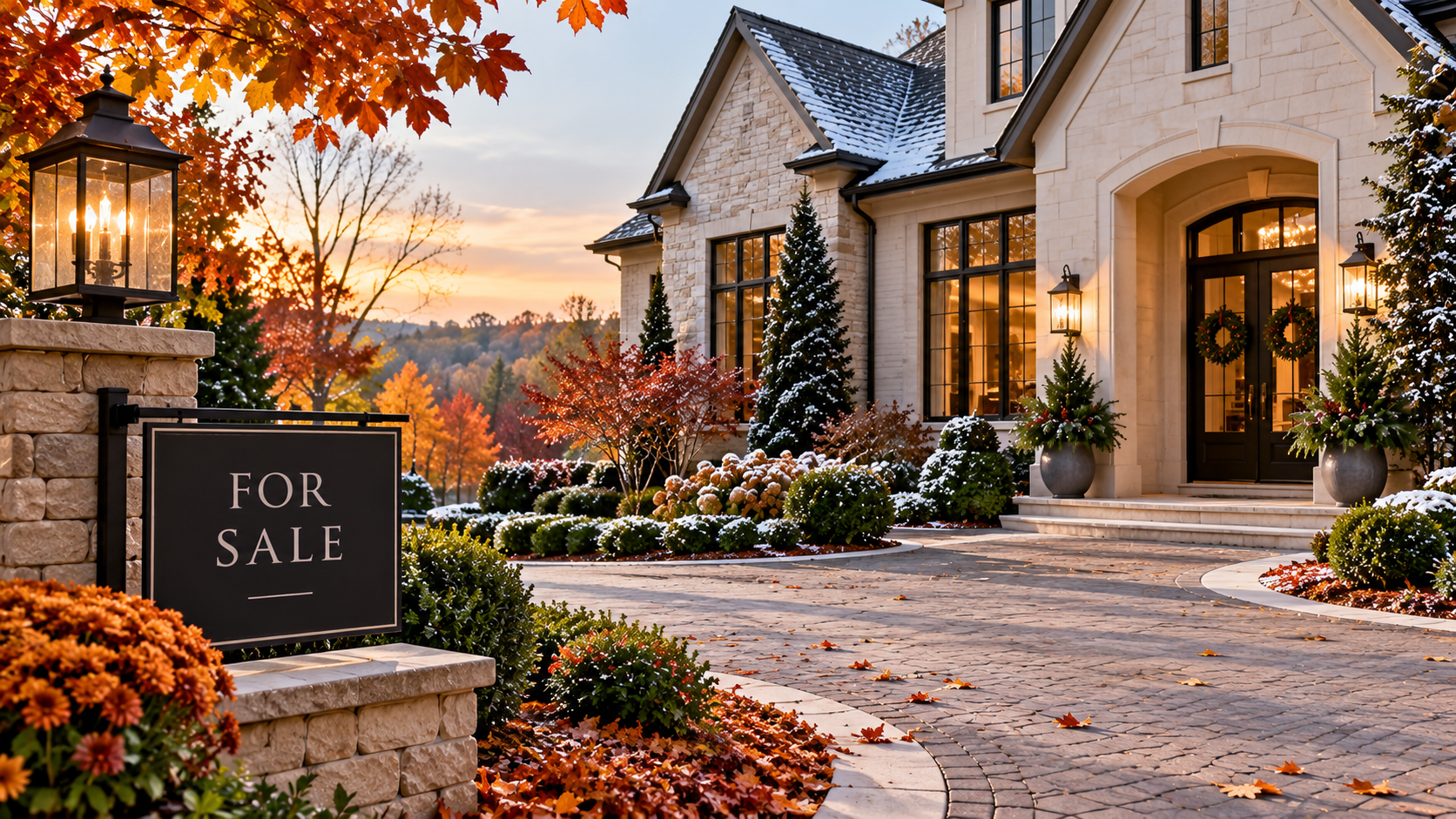
Selling a luxury home in fall and winter is less about whether to list and more about adjusting for what changes. Fewer homes come to market, fewer buyers are looking, and the ones who are looking tend to be moving on a timeline rather than browsing. At the upper price tier in Milton, Ball Ground, and the gated communities of Cherokee and Cobb counties, that trade can favor a seller: less competition on the market against a smaller but more committed pool. What it does require is different preparation, because bare trees, short days, and Georgia's wet winter change how a property presents.
Here is what actually shifts in the off season, and what to do about each piece.
Key Takeaways
- Fewer competing listings can offset a smaller buyer pool at the luxury tier.
- Off-season buyers are usually moving for a reason, which tends to mean fewer casual showings.
- Bare trees reveal views and also reveal neighbors; walk the property and look at both.
- Shorter days compress the showing window, so lighting and photography timing matter more.
- Pricing a thin market rewards accuracy over ambition, since there are fewer buyers to correct a mistake.
"I would rather have four serious buyers in January than twenty weekend browsers in May. At this price point the question is never how many people walk through, it is whether the right one does, and off-season traffic is almost entirely the right one."
Marna Friedman, REALTOR®, Atlanta Communities
Is fall and winter actually a bad time to list a luxury home?
It is a different time, not automatically a worse one. Inventory typically thins in the late fall and through the winter holidays, which means a well-prepared home has less to compete against. Buyers active in that window are frequently relocating for work, under a timeline created by a sale of their own, or working toward a specific date, and that motivation shows up in how they tour and how they negotiate.
The luxury tier also behaves somewhat independently of the broader seasonal pattern. Estate properties often have longer marketing periods regardless of season because the buyer pool is inherently smaller, so the seasonal swing is proportionally less dramatic than it is in a starter-price neighborhood. A home that would take months to sell in April will likely take months in November too, and the calendar is not the main variable.
The real question is usually one of readiness. A luxury home that goes on the market before it is prepared loses more to that than to any season. My luxury homes guide covers the market context, and my seller resources cover the preparation sequence.
How does listing in the off season compare with spring?
The trade-offs are fairly predictable at this tier.
| Factor | Fall and winter | Spring |
|---|---|---|
| Competing inventory | Lighter | Heavier |
| Buyer volume | Lower | Higher |
| Buyer motivation | Generally higher | More mixed |
| Landscaping presentation | Dormant, needs planning | At its best |
| Showing window | Short daylight hours | Long |
| Views through trees | Revealed | Screened by foliage |
| Negotiating posture | Fewer offers, more serious | More offers, more variance |
The views row cuts both ways and deserves a walk of the property. Bare canopy in December can open a long ridge view that no one knew was there, which is genuinely worth photographing. It can also reveal a neighboring roofline that summer foliage hid, which you should know about before a buyer points it out.
How should you prepare the property?
Off-season preparation is largely about compensating for what the season takes away:
- Lighting throughout: replace every dead bulb, match color temperature across fixtures, and add lamps in rooms that go dim early. This is the single highest-return item in winter.
- Exterior and landscape lighting: at short-day showing times, approach lighting and uplighting on architecture and specimen trees do a great deal of work.
- Evergreen structure: where the planting scheme goes fully dormant, evergreen containers and well-maintained beds keep the exterior from reading as neglected.
- Hardscape and drainage: Georgia's wet season and red clay show up on driveways, walkways, and entries. Pressure washing and correcting any standing water matter more now.
- Gutters and roofline: after leaf drop, clear gutters and address anything visible from the ground, since a buyer's eye goes there in a bare-tree season.
- Interior warmth: a comfortable temperature and a working fireplace, serviced and documented, present well on a cold showing.
- Neutral seasonal decor: restrained is the rule; heavy holiday decoration obscures the architecture and dates the photographs.
My guides to staging room by room and pre-listing maintenance cover the broader preparation, and my post on chimney and fireplace prep is directly relevant if you plan to have a fire going.
What about photography and marketing?
Photography is where the season is most visible, and it is worth solving deliberately. Schedule exterior photography for a clear day and shoot the front elevation at the hour the light works for its orientation. Twilight photography is especially effective in the off season, since a lit home against a winter dusk sky presents architecture and landscape lighting in a way midday cannot.
If the property has significant grounds, consider including a photograph or two from a previous growing season, clearly identified as such, so buyers understand what the landscape does in spring. Being transparent about it is the point; a buyer who feels a photo was misleading loses trust in everything else in the presentation.
The written marketing should lean into what the season shows well: interior volume, finishes, fireplaces, light quality, and any view opened up by bare canopy. On the sloped, wooded homesites common around BridgeMill and toward Ball Ground, that winter sightline is sometimes the property's strongest feature and is invisible in a July listing.
How should you think about pricing?
Accuracy matters more in a thin market. With fewer active buyers, an overpriced listing does not get corrected quickly by traffic; it simply sits, and days on market accumulate through a period when there was never much activity to begin with. That accumulated time then follows the property into spring, when the buyer pool that might have paid the number arrives and sees a listing that looks stale.
Comparable sales also need care. At the luxury tier there are fewer transactions to begin with, and a fall or winter analysis may be leaning on sales from a different market period. Look at what is currently active and what has recently gone under contract, not only what closed, and understand how your property differs from each.
Decide in advance what you will do if you are still on the market in February, since that is a strategic choice rather than a reaction. A valuation is the starting point, and my luxury lifestyle page covers the market segment more broadly.
How do you handle showings around the holidays?
Set your availability honestly rather than optimistically. If there are dates you will not show, block them at the outset so a request never gets declined, since a declined showing at this tier can mean losing a buyer who was in town for a narrow window. Relocating buyers frequently tour during holiday travel, which is exactly why the season produces serious activity.
Practical things that help: keep walkways clear and salted if conditions call for it, provide a place for wet coats and shoes at the entry, keep the home at a comfortable temperature rather than an economical one, and have interior lighting on before the buyer arrives rather than turning it on as they walk through. Small items, but at a short winter showing hour they determine the first impression.
Frequently Asked Questions
Should I just wait until spring to list?
Sometimes, particularly if the property needs work or if its grounds are a primary selling feature that only reads in season. But spring brings more competing inventory, and a home that is genuinely ready can do well against a lighter field. The decision should turn on your readiness and your timeline rather than on the calendar alone.
Do the holidays really hurt showing activity?
Activity slows around the peak holiday days and picks back up quickly. What often surprises sellers is that relocating buyers tour during holiday travel, so the showings that do happen in that window can be unusually serious. Block only the dates you truly need.
Does dormant landscaping lower what a buyer will pay?
Buyers understand seasons and generally do not penalize a dormant lawn. What does cost you is a property that looks neglected rather than dormant, which is a maintenance question rather than a seasonal one. Clean beds, cleared gutters, and evergreen structure carry most of the weight.
Is twilight photography worth it?
At the luxury tier in the off season, generally yes. It shows architecture, landscape lighting, and interior warmth in a single frame and stands out in a search results grid. Schedule it alongside your daytime exterior shoot rather than as an afterthought.
How long should I expect a luxury listing to take?
Longer than a mid-market home in any season, since the buyer pool is smaller by definition. Marketing periods at this tier vary widely with price point, property type, and how specific the home is. Rather than working from a general expectation, look at recent activity for comparable properties in your specific segment.
Considering listing a luxury home in NW Metro Atlanta?
The off season rewards preparation more than it punishes timing, and the properties that do well in it were ready before they went live. I help sellers position estate homes across Milton, Ball Ground, and the gated communities of Cherokee and Cobb. Read my luxury homes guide, request a valuation, or reach out to talk through timing.
Marna Friedman is a licensed REALTOR® with Atlanta Communities Real Estate Brokerage serving NW Metro Atlanta. Market conditions, inventory levels, and marketing periods vary by segment and change over time; current data for your specific property and price point should guide any listing decision. Information is deemed reliable but not guaranteed. Equal Housing Opportunity.
Check out this article next