
Home Maintenance · NW Metro Atlanta
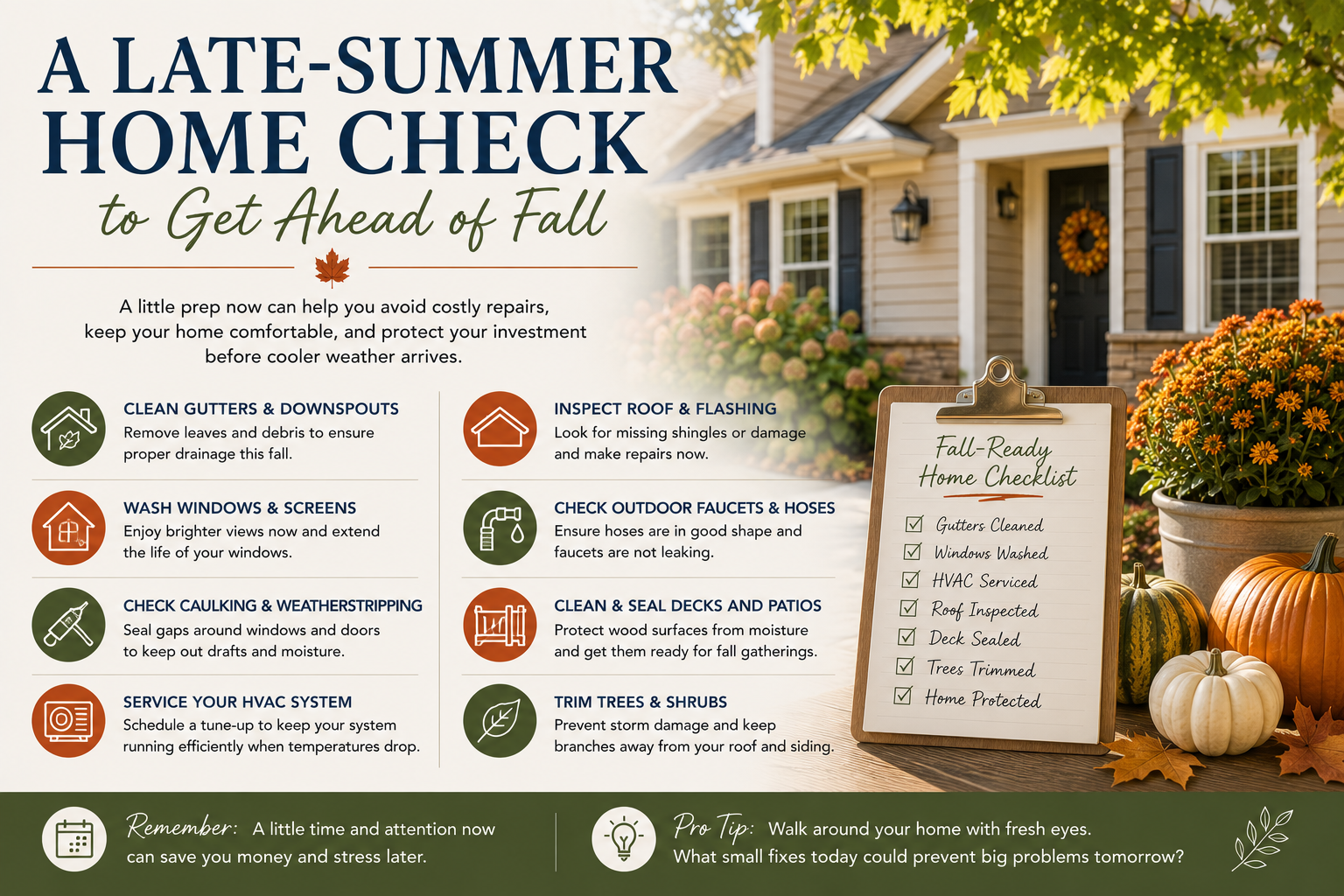
A late-summer home check is a one-to-two-hour walkthrough, done in late August or early September, with two purposes: assess what months of Georgia heat, humidity, and storms actually did to your home, and knock out the projects that still need warm weather before it leaves. Do it now and your fall list becomes short and calm instead of long and urgent.
Late summer is the most useful inspection moment on the whole calendar, because the stress season just ended and the evidence is fresh. Here is the walkthrough I recommend to homeowners across Cobb, Cherokee, Forsyth, and North Fulton counties, outside first, then inside, then the warm-weather-only punch list.
Key Takeaways
- Walk the exterior looking specifically for what summer caused: cracked caulk, faded or peeling paint, storm-loosened gutters, and drainage evidence.
- Exterior painting, caulking, sealing, and driveway work need warm, dry weather; late summer is the closing window.
- Check the HVAC's summer performance now and note anything for the fall service visit.
- Inspect for the moisture and pest activity that Georgia's humid months encourage, especially in crawlspaces and around foundations.
- Book fall's pro services (HVAC, chimney, gutters, tree work) now, before everyone else calls in October.
"Late August is the hinge of the Georgia maintenance year, when the heat has tested every seal and the red clay tells you where water goes. The homeowners across Cobb and Cherokee who book their fall professionals before Labor Day get first pick of every calendar."
Marna Friedman, REALTOR®, Atlanta Communities
What should the exterior walkthrough look for?
Circle the house slowly with a notepad, reading the summer's evidence. Caulk and sealant around windows, doors, and trim take the worst of the heat; look for cracking, shrinking, and gaps, because every gap you seal now is conditioned air kept and pests excluded later. Check paint and siding for peeling, blistering, or fading on the sun-hammered south and west faces, and note bare wood anywhere; bare wood entering a wet winter becomes rot.
Look up: shingles lifted or missing after summer storms, flashing that has worked loose, gutters pulling away from the fascia, and limbs that grew over the roofline this season. Look down: erosion channels in the beds, mulch washed onto walks, and soil pulled away from the foundation, all of which map exactly where your drainage needs help before fall rains. My summer exterior guide pairs with this as the before picture; this walkthrough is the after.
Which projects must happen while it's still warm?
Several jobs simply do not work in cold weather, which makes late summer their deadline rather than their option:
- Exterior painting and staining: paint and stain cure properly within manufacturer temperature ranges, and fall nights start dropping out of them. Decks and fences that need stain want it now.
- Caulking and sealing: sealants also have application temperature minimums, and they adhere best to warm, bone-dry surfaces.
- Driveway and concrete work: sealing asphalt and patching concrete both prefer warm cure conditions.
- Pressure washing: siding, walks, and decks dry fast in warm weather, which is what you want before sealing or staining them.
- Screen and weatherstripping repairs: pleasant-weather jobs that pay off the first cold night.
What does a late-summer check cover, zone by zone?
| Zone | Check for | Action |
|---|---|---|
| Siding, trim, paint | Cracked caulk, peeling paint, bare wood | Seal and paint while warm |
| Roof and gutters | Storm damage, loose flashing, sagging runs | Repair now; schedule leaf-season cleanings |
| Grounds and drainage | Erosion paths, settled soil at foundation | Regrade beds, extend downspouts |
| Crawlspace / basement | Moisture, musty odor, pest evidence | Address humidity source; call pest pro if active |
| HVAC | Rooms that lagged, short cycling, noise | Note symptoms for the fall tune-up; replace filter |
| Decks and outdoor living | Loose boards and rails, finish wear | Fasten, clean, and stain in the warm window |
What should you check inside?
Summer's indoor evidence hides in the systems that worked hardest. How did the air conditioning really perform: any rooms that never cooled, any short cycling, any weeks the upstairs lagged? Write it down now and hand the list to the technician at fall service, because "it struggled in July" is diagnosable in October only if someone recorded it. Change the filter, and check the condensate line and pan for the algae clogs our humidity breeds.
Then hunt moisture: ceilings and window sills for staining, bathroom fans for actual airflow, the crawlspace or basement for mustiness, condensation, or efflorescence on block walls. Georgia's humid summer is also peak insect season, so note any evidence, droppings, wings, mud tubes near the foundation, and bring in a pest professional promptly if anything looks active rather than historical.
How does this set up an easy fall?
Everything the walkthrough finds sorts into three buckets: do now while it is warm (paint, seal, stain, drainage), schedule now for fall (HVAC tune-up, chimney service, gutter cleanings, tree work, all of which book out fast once temperatures drop), and monitor (the hairline crack you photograph today and compare in January). That triage is the whole trick; the fall checklist then becomes execution rather than discovery.
And if listing your home is anywhere in the next year's plans, this walkthrough doubles as your market-prep audit; buyers and inspectors will read the same evidence you just did, a connection I detail in maintenance that pays off before selling.
What do the outdoor systems and storage areas need now?
Late summer is shutdown-planning season for everything that worked hard outdoors. Run the irrigation zone by zone while the system is still operating daily and fix what you find, misaimed heads, broken risers, zones that run long, because repairs are easier now than during fall winterization, and a tuned system finishes the season without waste. Give hoses, sprayers, and watering equipment a survey with storage in mind, and start the mental list of what gets drained, coiled, and shelved when the first freeze approaches.
Lawn equipment is entering its final stretch: a mid-to-late-summer blade sharpening and deck cleaning carries the mower through leaf season, and anything running rough should visit the shop now, ahead of the fall backlog. The grill and outdoor kitchen deserve a deep clean while cooking season is still on, along with a burner and connection check. Patio furniture, cushions, and umbrellas last years longer when they are cleaned before storage rather than after a winter outside, so late summer's dry heat is exactly the right drying weather for that project.
Finish in the garage and storage areas, because they are about to change jobs from summer staging to winter shelter. Sweep, check for moisture and pest evidence along the walls, and rearrange so fall's tools come forward while beach and pool gear retires cleanly. Then spend ten minutes writing down what you did and what you deferred, dates, model numbers, the quote you meant to get. That little home log turns next season's walkthrough, and someday a buyer's questions, into a matter of record instead of memory.
If the season got away from you and half of this list is untouched, start with water: the irrigation audit and the drainage walk protect the house itself, while everything else protects equipment and convenience. Triage in that order and even a single Saturday of late-summer attention earns its keep, with the rest folding into the fall checklist right behind it. The seasons are forgiving to owners who work in the right order, and water first is always the right order in Georgia. Everything else on the list is comfort and cost; water is the one that touches the structure itself, which is why it leads every triage this guide recommends. Get the water right, and the rest of the list becomes optional in the best sense: improvements on a sound house rather than rescues of a struggling one.
Frequently Asked Questions
When exactly should I do a late-summer home check?
Late August through mid-September works well in Georgia: summer's effects are fully visible, and enough warm weather remains to finish paint, caulk, and sealing projects properly.
What summer damage is most common on Georgia homes?
Failed caulk and sun-degraded paint on south and west exposures, gutter and shingle issues from summer storms, drainage erosion from downpours, and humidity-driven moisture in crawlspaces.
Can I paint outside in the fall instead?
Early fall often works, but paint and sealants have minimum application temperatures, and cool nights arrive abruptly. Late summer removes the gamble.
Why book fall services now?
HVAC companies, chimney sweeps, gutter crews, and tree services all hit their seasonal backlog when the first cold weather arrives. Booking in September gets your preferred dates.
How long does the walkthrough take?
One to two hours for a thorough exterior circle plus the key interior checks. The notepad matters more than the pace; the value is the written list you triage afterward.
Homes reward the owners who read them season by season, and late summer is the easiest read of the year. If you are preparing a NW Metro Atlanta home for market, or want one that has clearly been cared for this way, my seller resources are the next stop, or reach out anytime.
Marna Friedman is a REALTOR® with Atlanta Communities serving NW Metro Atlanta. Maintenance needs vary by home; consult qualified professionals for inspections and repairs. Information is deemed reliable but not guaranteed. Equal Housing Opportunity.
Check out this article next