
Luxury · NW Metro Atlanta
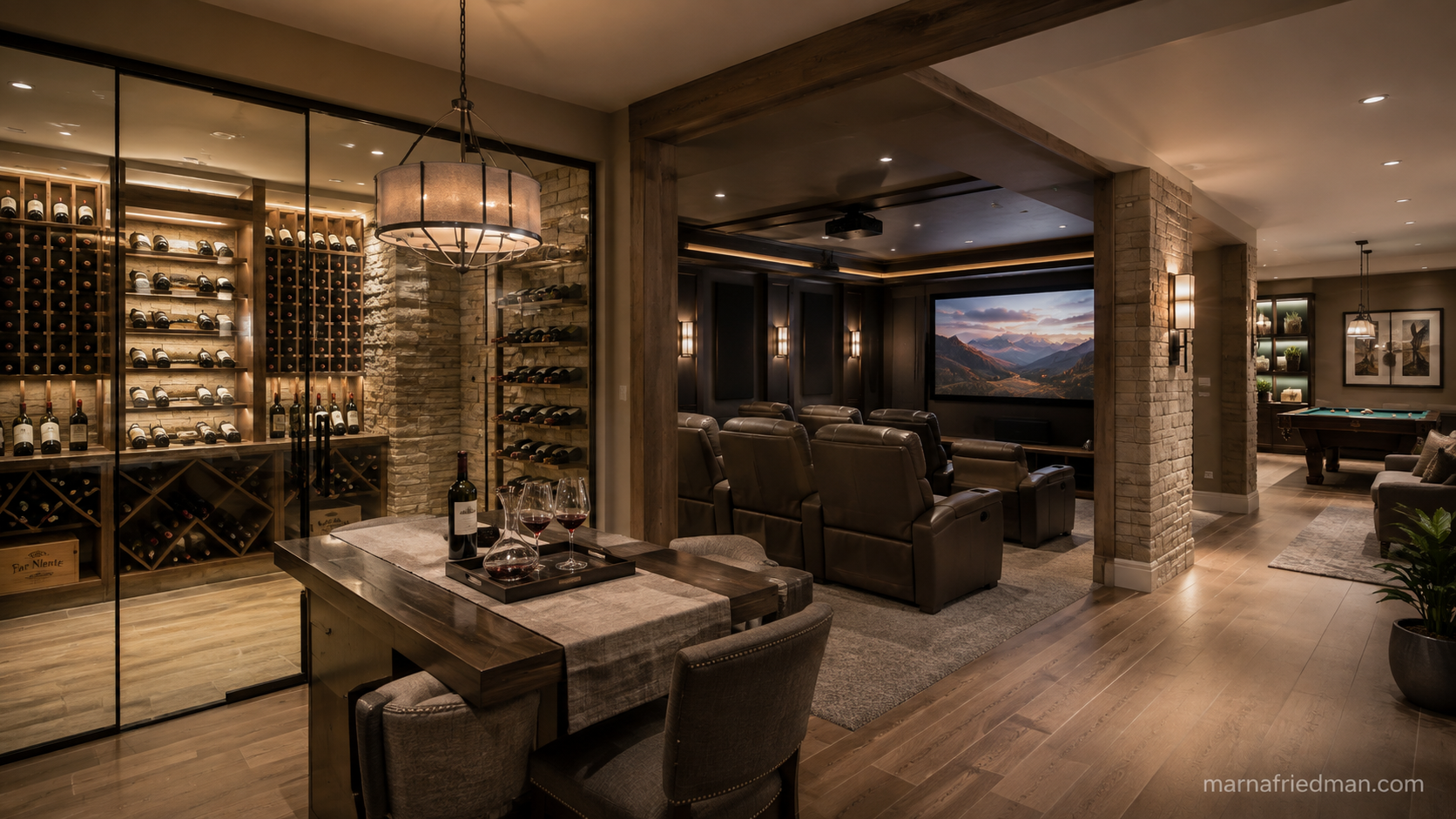
Wine cellars, home theaters, gyms, saunas, wine-tasting rooms, offices, and specialty craft or hobby rooms have become common features in NW Metro Atlanta luxury homes. Some add real value; others feel dated within a few years. What separates a specialty room that holds value from one that becomes an awkward space is how well it's integrated into the home's design, how flexible it is over time, and whether it serves how the current or future owner will actually use it. Here's a look at the most common luxury specialty rooms, what makes them work, and what to think about when evaluating them as a buyer or planning them as a builder or renovator.
A practical look at specialty rooms in NW Metro Atlanta luxury homes: wine cellars, theaters, gyms, and other dedicated spaces, and what makes them work.
Key Takeaways
- Well-integrated specialty rooms add real value.
- Trendy single-use rooms often date quickly.
- Flexibility for future use matters.
- Location within the home affects usability.
- Wine cellars and offices are the most durable additions.
"Specialty rooms are where luxury homes get personal. The ones that work best across resales are the ones with real infrastructure and flexibility, not the ones designed around a specific hobby the owner had in 2015."
Marna Friedman, REALTOR®, Atlanta Communities
What are the most common luxury specialty rooms?
Categories that show up regularly in NW Metro Atlanta luxury homes:
- Wine cellars or wine rooms: temperature-controlled storage with display and often tasting components.
- Home theaters: dedicated media rooms with theater seating, projection or large-format displays, and acoustic treatment.
- Home gyms: equipment-ready rooms with proper flooring, mirrors, and ventilation.
- Home offices: especially since 2020, dedicated office space with built-in desks, cabinetry, and connectivity.
- Craft or hobby rooms: art studios, sewing rooms, workshops.
- Music rooms: piano rooms, practice spaces with acoustic considerations.
- Bourbon or cigar rooms: more recent addition; smaller, wood-paneled spaces for entertaining.
- Saunas and wellness spaces: in-home spa rooms.
- Library or study: the traditional dedicated-book room.
- Golf simulator rooms: larger dedicated spaces with equipment.
Not every luxury home has these; some have several. The question is always which ones make sense for the specific home and owner. See my luxury homes guide for broader context.
What makes a wine cellar work?
Wine cellars are one of the more common and durable specialty rooms:
- Actual climate control: temperature (55-58 degrees Fahrenheit) and humidity (50-70%) maintained by dedicated cooling equipment, not just insulation.
- Proper insulation and vapor barrier: to maintain the environment.
- Racking with real capacity: hundreds of bottles minimum for a true cellar; less for a "wine display" that isn't a cellar.
- Display or tasting area: often paired with the storage; where wines can be viewed or served.
- Location matters: basement or interior locations (not against exterior walls) are easier to climate-control.
- Lighting design: LED to avoid heat; dimmable for tasting.
- Real infrastructure: proper electrical, dedicated cooling, occasionally water for a small sink.
Wine cellars hold value when they're real; decorative wine displays that look like cellars but lack climate control don't add the same value.
What makes a home theater work?
Theaters are common but often overbuilt for how they're actually used:
- Room shape: rectangular is easier for acoustic and viewing geometry than square.
- Real acoustic treatment: not just soundproofing, but treating internal acoustics (absorption, diffusion).
- Screen and projection or large display: the visual anchor.
- Seating: dedicated theater seating in tiered rows.
- Sound system: integrated surround with proper amplification.
- Lighting control: automated dimming, no windows or blackout treatment.
- Ventilation: often overlooked; dedicated equipment gets hot.
- Flexibility for the future: can the room be repurposed if theater use fades?
Some newer luxury builds are moving away from single-purpose theaters toward media rooms that can serve multiple functions. Convertibility improves resale.
Specialty room comparison
The table shows resale characteristics.
| Room type | Value durability | Flexibility |
|---|---|---|
| Wine cellar | High if properly built | Low; hard to repurpose |
| Home theater | Medium; some depreciation | Medium if convertible |
| Home office | High | High |
| Home gym | Medium | Medium (equipment removes) |
| Craft or hobby room | Medium | High if generic |
| Music room | Medium; specific market | Medium |
| Bourbon or cigar room | Variable; buyer-specific | Low; hard to repurpose |
| Golf simulator | Variable | Medium |
| Sauna or wellness | Growing market | Low; specialized |
Wine cellars and home offices are the most reliable value additions across a wide buyer pool.
What about home offices?
Since the shift to remote work, home offices have become one of the most valuable specialty rooms:
- Two dedicated offices are common: in luxury homes serving two working occupants.
- Real infrastructure: hardwired network, adequate electrical circuits, appropriate lighting.
- Sound privacy: insulated walls, doors, and separation from the rest of the house.
- Built-in storage and desk: often included at the luxury tier; more custom than IKEA-style.
- Video conference readiness: lighting, camera-friendly backgrounds, minimal echo.
- Views: a window matters for long work hours.
- Convertibility: a well-designed office can become a library, den, or guest room later.
Home offices are one of the specialty rooms that consistently add value across buyer types. Even buyers who don't work from home appreciate the dedicated space.
How does location within the home matter?
Where a specialty room sits affects its usability and value:
- Basement placement: good for theaters, wine cellars, gyms, and workshops. Away from main living but useable.
- Main-level placement: best for offices, libraries, music rooms; integrated with daily life.
- Upper-level placement: good for hobby rooms, additional offices, workout spaces; often accepts smaller footprints.
- Adjacent to the primary suite: for wellness spaces, saunas, private gyms.
- Near the kitchen or bar: for wine cellars and tasting rooms.
- Detached: some estates have detached buildings for guest houses, offices, or specialty use.
The location decision affects daily use as much as the room itself. My luxury lifestyle page has broader estate-tier context.
What should buyers evaluate on a tour?
When touring a luxury home with specialty rooms:
- Real infrastructure vs. cosmetic setup: the wine cellar with a decorative cooler isn't a real cellar.
- Condition of equipment: theater electronics, gym flooring, sauna heating; anything specialized should be evaluated for condition and age.
- Flexibility for your use: would you use it as designed, or need to change it?
- Cost to modify: repurposing costs vary widely by room type.
- Value at resale: would a future buyer see this as an asset or a quirk?
- Maintenance implications: some rooms (wine cellars, saunas) have ongoing maintenance needs.
Specialty rooms should be evaluated for how they'd work for you specifically, not just for their impressive marketing description.
How does climate control affect specialty room design in Georgia?
Georgia's climate creates specific considerations for specialty rooms across NW Metro Atlanta homes:
- Humidity management: wine cellars need active humidity control (50 to 70 percent); Georgia summers pull humidity higher than most cellar equipment is sized for without dedicated dehumidification.
- Basement moisture: many basements across Cobb, Cherokee, and Paulding counties handle moisture reasonably well, but any specialty room in a basement needs verified moisture management before finish.
- Cooling for equipment-heavy rooms: theaters, gyms, and simulator rooms generate heat; dedicated HVAC zoning or supplemental cooling matters.
- Sauna and wellness ventilation: humidity control and proper exhaust are critical.
- Attic-level rooms: harder to climate-control effectively in Georgia summers; often better as flex rooms than specialty spaces.
- Insulation and vapor barriers: more important in this climate than in cooler regions; skimping shows up as issues within a few years.
Well-executed specialty rooms in NW Metro Atlanta include the climate systems that keep them working over years. Rooms that were pretty on completion but lack proper systems tend to develop moisture, comfort, or equipment problems within one to three years. Ask about system specifications when evaluating existing specialty rooms; they matter as much as the finishes you can see.
Frequently Asked Questions
Which specialty rooms add the most value at resale?
Well-built wine cellars and well-designed home offices are among the most reliable value additions. Home theaters and gyms depend on execution and buyer taste. Highly specialized rooms (cigar rooms, specific hobby spaces) can appeal to fewer buyers.
Are home theaters still popular?
Somewhat less than a decade ago. Media rooms (flexible spaces that can be theaters or gathering spaces) have become more common than dedicated theaters. Home theaters still add value but the execution matters more than it once did.
What's a typical wine cellar capacity?
Small cellars start around 500 to 1,000 bottles. Larger residential cellars can hold several thousand. Capacity should match how much you actually store; oversized cellars can look empty and undersized fill quickly.
Should I add a specialty room during a renovation?
If it's something you'll use and it fits the home naturally, often yes. If it requires forcing the space or major structural changes, weigh the cost against how long you'll actually stay and use it.
Do luxury buyers really care about these rooms?
Yes, though preferences vary. Some buyers view specialty rooms as premium features; others see them as spaces to convert. Marketing a home with these rooms works best when they're well-executed and adaptable.
Considering a luxury home in NW Metro Atlanta?
Specialty rooms are one of the areas where luxury homes really differentiate. I help buyers evaluate what makes sense for their lifestyle and sellers position specialty features effectively. Read my luxury homes guide, my custom luxury home build post, or reach out to discuss your priorities.
Marna Friedman is a licensed REALTOR® with Atlanta Communities Real Estate Brokerage serving NW Metro Atlanta. This article is general guidance; specific value implications and design considerations vary. Consult qualified professionals for your specific situation. Equal Housing Opportunity.
Check out this article next