
General Real Estate · NW Metro Atlanta
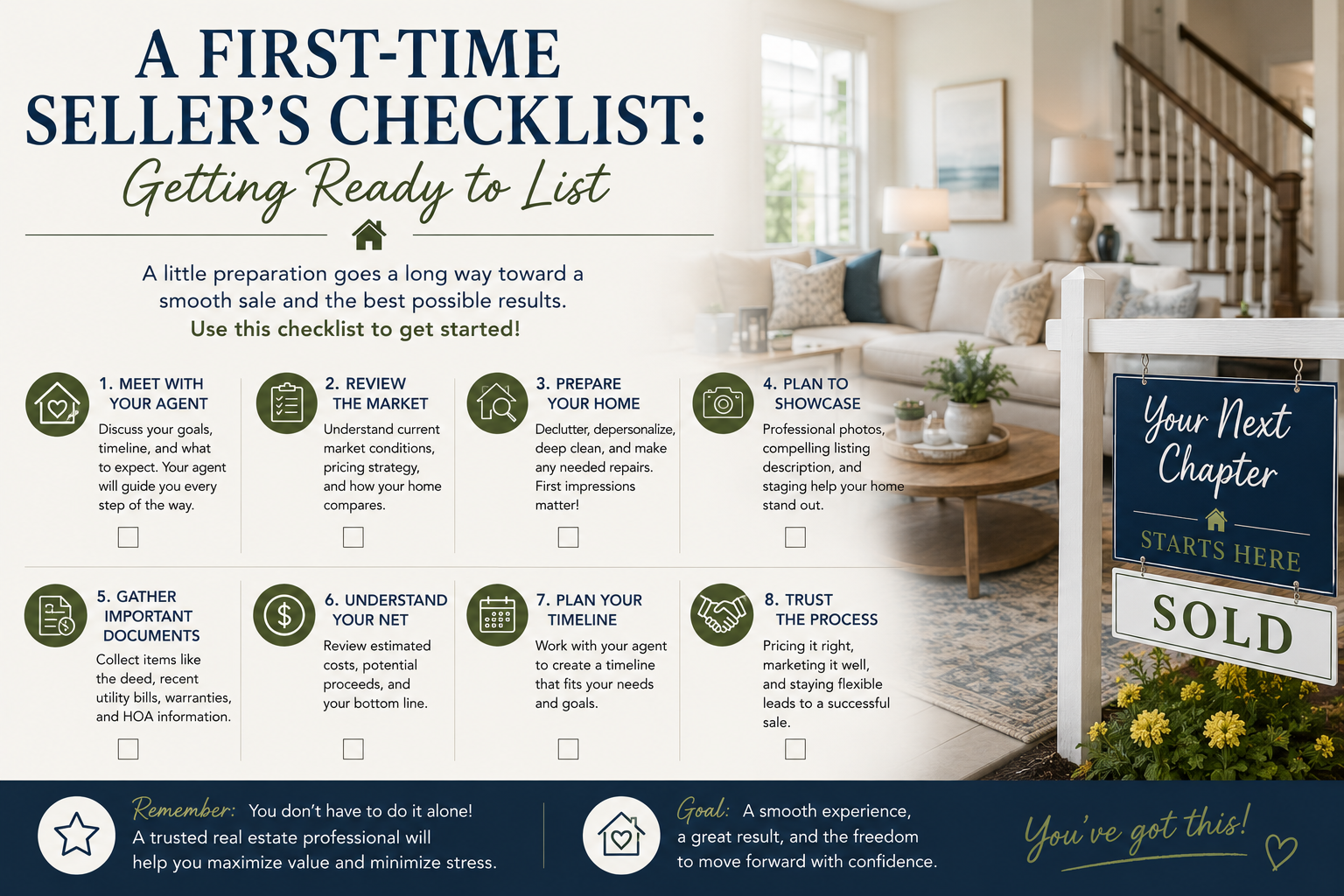
Selling a home for the first time comes down to five phases, in order: understand your numbers, choose your representation, prepare the home, price and launch it, then manage offers through closing. Start the process 60 to 90 days before you want a sign in the yard, and every later phase gets easier because the earlier ones were not rushed.
Most people sell a home far less often than they buy one, so even experienced buyers are frequently first-time sellers. Here is the checklist I walk NW Metro Atlanta homeowners through, phase by phase, with the timing that makes each step comfortable instead of frantic.
Key Takeaways
- Start 60 to 90 days out; preparation is the phase sellers most often shortchange.
- Know your numbers first: payoff amount, estimated net proceeds, and where you are going next.
- Prioritize the prep that returns money, deep cleaning, decluttering, touch-up paint, and small repairs, over big renovations.
- Price from current comparable data, not from memory, hope, or an online estimate.
- Evaluate offers on their whole shape: price, contingencies, financing strength, and timeline together.
"First-time sellers from Marietta to Acworth's Lake Allatoona side are often sitting on more equity than they realize. The checklist matters because the market rewards preparation over improvisation, every time."
Marna Friedman, REALTOR®, Atlanta Communities
Phase 1: What numbers do you need before anything else?
Request a payoff quote from your mortgage servicer (the payoff differs from the balance on your statement), and list anything else attached to the property: a home equity line, solar agreement, or unresolved lien from an old project. Then rough out net proceeds: expected sale price, minus payoff, the costs itemized in your listing paperwork, seller-paid closing items, and any prep budget. That single number drives every decision after it, including what you can do next.
Speaking of next: know your destination plan before you list. Buying another home, renting between, or relocating each changes the ideal timeline and contract terms, and if you are buying, the sell-first versus buy-first question deserves a real answer up front. A current market analysis anchors all of it; start with what's my home worth.
Phase 2: How do you choose representation and a strategy?
Interview agents the way you would any professional: recent sales in your area and price range, a specific marketing plan for your house rather than a generic one, a pricing rationale built on comparables they can show you, and clear communication about how offers, showings, and negotiations will run. Ask each candidate what they would spend prep money on in your specific house; the quality of that answer tells you a lot.
This is also when the strategy questions get settled: target list date (and what the season means for your market), whether to complete a pre-listing inspection, and how showings will work around your household. Georgia's disclosure practices come into play here too; you will complete a property disclosure, and honest, thorough answers protect you far more than optimistic ones.
Phase 3: What prep actually pays?
The highest-return work is cheap and unglamorous:
- Declutter and depersonalize: closets half-empty, surfaces clear, collections packed. You are moving anyway; start now.
- Deep clean everything, professionally if possible, including windows. Clean is the least expensive luxury finish that exists.
- Touch-up paint and small repairs: scuffed walls, sticking doors, dripping faucets, burned-out bulbs; the list from maintenance that pays off applies directly.
- Curb appeal basics: fresh mulch, trimmed shrubs, a clean front door zone; the photo that decides whether buyers click is taken from the street.
- Stage what matters: the living room, kitchen, and primary suite carry the listing; my room-by-room staging guide covers the rest.
What usually does not pay: major renovations undertaken solely to sell. Price the home for its actual condition instead, and let the buyer renovate to their own taste.
What does the full timeline look like?
| Phase | Timing | Key tasks |
|---|---|---|
| Numbers and plan | 90 to 60 days out | Payoff quote, net estimate, destination plan |
| Representation and strategy | 75 to 60 days out | Interview agents, set list date, disclosure prep |
| Preparation | 60 to 14 days out | Declutter, clean, repairs, staging, curb appeal |
| Pricing and launch | 14 to 0 days out | Final comparables, photos, listing live, showings begin |
| Offers to closing | Contract + roughly 30 to 45 days | Negotiate, due diligence, appraisal, move, close |
Phase 4 and 5: How do launch, offers, and closing work?
Pricing is the launch decision that outweighs all others. Set it from sold comparables in your immediate area over recent months, adjusted honestly for condition, and resist the anchor of what a neighbor asked (asking is not selling) or what an algorithm guessed. The market's verdict arrives fast: strong showing traffic and offers in the first two weeks confirm the price; silence is data too, and the full logic is in how to price your home to sell.
When offers come, read the whole offer: price, earnest money, due diligence length, financing strength and appraisal terms, and the closing date against your destination plan. The highest number is not always the strongest contract; the contingencies I explained in contract contingencies are exactly where offers differ. From binding contract, expect the buyer's inspection and possible repair negotiation, the appraisal, and then a Georgia attorney-conducted closing roughly 30 to 45 days later. Keep the home insured and maintained to the end; it is yours until it funds.
How do you live in a home that's on the market?
The listing period is its own phase, and first-time sellers feel it most, because the house has to stay one hour from showable for weeks. The trick is a routine, not a standard: a fifteen-minute reset each morning, beds, counters, dishes, a basket that sweeps daily clutter into a closet, and the house holds showing condition without daily heroics. Decide the household's showing rules with your agent up front, how much notice you require, any blocked times, and how spontaneous requests get handled, then say yes to every showing you reasonably can, because the buyer who could not get in rarely circles back.
Plan for the parts of daily life that showings complicate. Pets should have a plan for every showing window, crated, walked, or visiting a neighbor, both for their calm and the buyers'. Valuables, medications, and personal papers belong out of sight and secured for the duration, as a simple matter of prudence with strangers walking through. Keep utilities comfortable even when you are out, a stuffy or dark house shows terribly, and leave lights on and blinds open for scheduled showings so the house greets people at its best.
Treat feedback as data rather than judgment. Your agent will gather showing responses; patterns matter, one buyer's paint opinion does not. Expect the rhythm to be lumpy, a rush at launch, quiet midweeks, waves after price or marketing changes, and measure the listing in weeks of pattern rather than days of mood. Sellers who manage this phase calmly negotiate better when the offer arrives, simply because they are not exhausted by the wait.
And give the phase an end date in your mind: listing periods feel long from inside but read as weeks on a calendar, and every showing survived is data banked toward the offer that ends them.
Frequently Asked Questions
How far in advance should I start preparing to sell?
Sixty to ninety days before your target list date. Decluttering and small repairs consume more calendar than sellers expect, and rushing them shows in the photos.
Should I renovate before selling?
Rarely. Cleaning, decluttering, paint, and minor repairs return their cost far more reliably than major projects. Price the home for its condition and let buyers renovate to taste.
Do I need a pre-listing inspection?
It is optional and situational. It surfaces surprises while you can fix them calmly, but findings may create disclosure obligations. Discuss the trade-off with your agent for your specific home.
What if my home doesn't get offers?
The market is answering, usually about price, occasionally about presentation or access. Review showing feedback with your agent and adjust deliberately; the first weeks of data are the most valuable you will get.
What does selling cost in Georgia?
Typical seller costs include attorney and title-related items, any negotiated buyer credits, prep expenses, prorated taxes, and the items in your listing paperwork. Your net sheet should itemize all of it before you list; keep figures general until it does.
Can I sell and buy at the same time?
Yes, with planning: sell-first, buy-first, and contingent structures each work in the right situation. The coordination is the service; that is precisely what your agent should be managing.
A first sale done in the right order feels surprisingly manageable, and the order is the whole checklist. If a sale is on your horizon anywhere in NW Metro Atlanta, start with my seller resources and a real number from what's my home worth, then reach out. I will build the 90-day plan with you.
Marna Friedman is a REALTOR® with Atlanta Communities serving NW Metro Atlanta. Costs, timelines, and contract terms vary by transaction; this article is general information, not legal or financial advice. Equal Housing Opportunity.
Check out this article next