
General Real Estate · NW Metro Atlanta
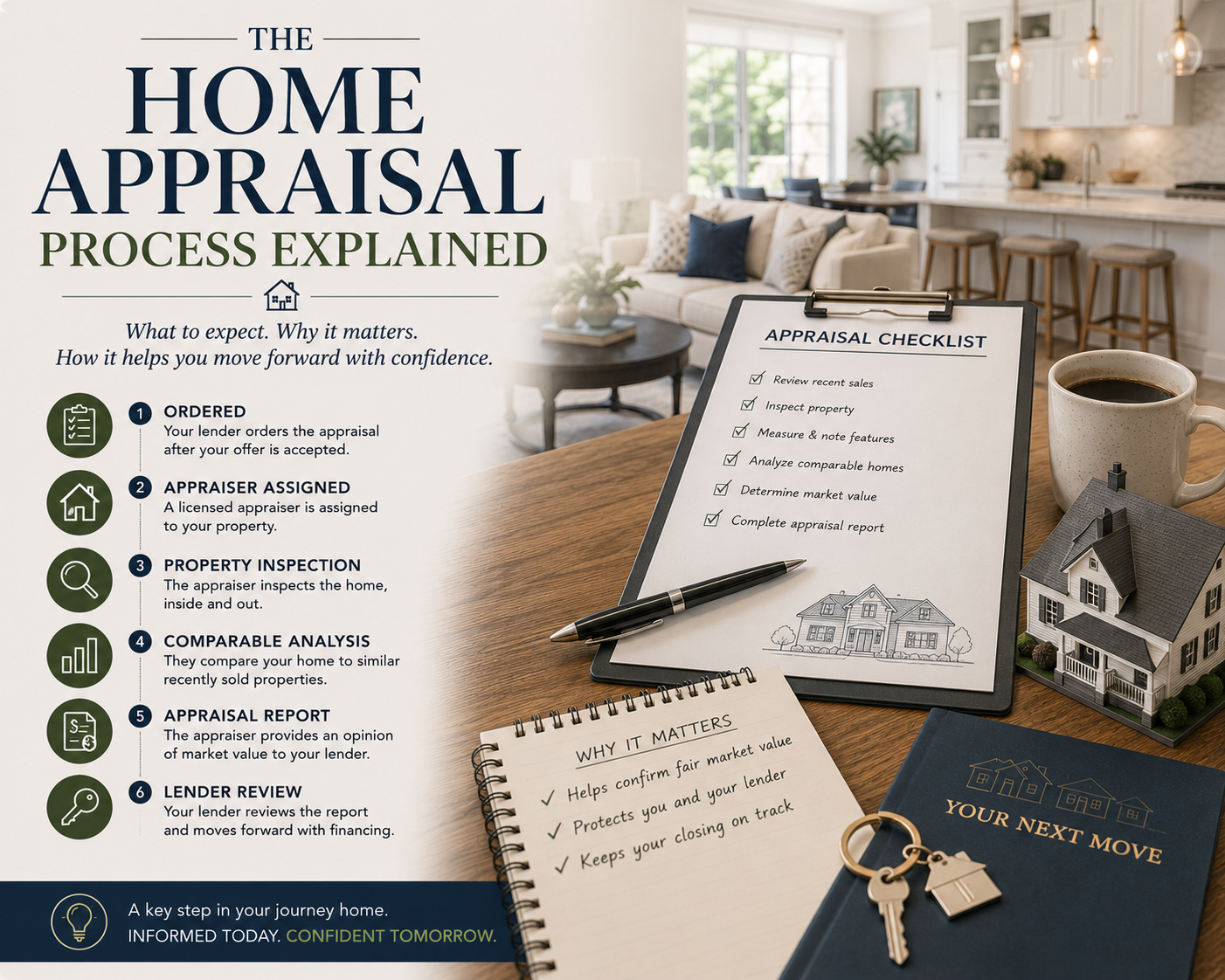
A home appraisal is an independent, licensed professional's opinion of a property's market value, ordered by your lender to confirm the home is worth what you agreed to pay. The appraiser inspects the property briefly, analyzes recent comparable sales, and delivers a written report; if the value meets or exceeds the contract price, the loan proceeds, and if it comes in low, the contract's appraisal terms decide what happens next.
Appraisals cause more mid-transaction anxiety than almost any other step, mostly because buyers and sellers do not control them. Understanding the process removes most of that anxiety. Here is how appraisals work in a Georgia purchase, what appraisers actually evaluate, and how low-appraisal situations get resolved.
Key Takeaways
- The lender orders the appraisal through an independent process; neither buyer, seller, nor agents choose the appraiser.
- Value rests primarily on recent comparable sales, adjusted for differences in size, condition, features, and location.
- An appraisal is not an inspection; it estimates value, not condition or safety.
- A low appraisal has several outcomes: renegotiate, bring extra cash, challenge the report, or exit under the contract's terms.
- In Georgia contracts, the appraisal right is a negotiated term; know what yours says before you sign.
"Appraisals in NW Metro Atlanta have to read real variety: a basement home on a Cherokee slope near Lake Allatoona and a slab home in a Cedarcrest corridor community on the Cobb line can sit a mile apart. Good comparable selection is local knowledge, street by street."
Marna Friedman, REALTOR®, Atlanta Communities
Who orders the appraisal, and when does it happen?
Once you are under contract and your loan application is moving, the lender orders the appraisal, typically through an appraisal management company that assigns an independent licensed appraiser. This independence is deliberate; post-2008 rules separate loan production from valuation so no one with a stake in the deal picks the appraiser. The buyer usually pays the fee as part of loan costs.
The appraisal generally lands in the middle of the contract-to-close timeline, after inspections, before final loan approval. The report takes several days to a week or more after the property visit, longer for complex or distinctive homes. The Consumer Financial Protection Bureau's home-buying resources outline where it fits in the sequence.
What does the appraiser actually do?
The property visit is shorter than people expect, often under an hour. The appraiser measures the home, photographs interior and exterior, notes construction quality, condition, layout, bedroom and bath count, upgrades, and site characteristics, and confirms the basics of what is being sold. The real work happens afterward: selecting recent comparable sales, ideally similar homes sold nearby within the last several months, and adjusting their prices for differences.
If a comparable has a finished basement and the subject does not, its sale price is adjusted down for comparison; if the subject has a newer roof or a larger lot, adjustments run the other way. The reconciled result is the opinion of value. Appraisers document everything on standardized forms, and lenders review the report before clearing the loan.
Appraisal vs. inspection: what's the difference?
| Question | Appraisal | Home inspection |
|---|---|---|
| Purpose | Estimate market value for the lender | Evaluate condition and function for the buyer |
| Who it protects | Primarily the lender's collateral | The buyer |
| Depth of visit | Brief walkthrough and measurement | Several hours, systems tested, attic and crawlspace entered |
| Output | Value opinion with comparable analysis | Condition report with defects and recommendations |
| Optional? | Required by most lenders | Your choice, and strongly recommended |
Both matter, and neither substitutes for the other; my guide to how home inspections work covers the condition side.
What happens if the appraisal comes in low?
A low appraisal means the appraiser's value is below the contract price, which caps what the lender will lend against. The gap gets resolved one of four ways:
- Renegotiate the price. The seller reduces to the appraised value, or the parties meet somewhere between. This is the most common resolution in balanced markets.
- Buyer covers the gap. The buyer brings additional cash to closing, paying the difference between appraised value and contract price out of pocket.
- Challenge the appraisal. Through the lender, you can submit a reconsideration of value with factual corrections or overlooked comparables. Reversals happen, but only with genuine evidence, not disappointment.
- Exit under the contract. If the contract gives the buyer an appraisal right and no agreement is reached, the buyer can terminate per its terms.
Which options you hold depends entirely on the contract you signed, which is why the appraisal term deserves attention at offer time, alongside the other protections covered in contract contingencies explained.
How can sellers and buyers help the appraisal go well?
Sellers: make the home easy to evaluate. Complete the obvious repairs, tidy and light the house as you would for a showing, and provide a list of improvements with dates and approximate costs, plus any documentation on major systems. Your agent can meet the appraiser with relevant recent sales data; appraisers decide independently, but accurate information helps. Pricing realistically in the first place, grounded in the same comparable logic appraisers use, prevents most low appraisals; see how to price your home.
Buyers: structure the offer with the appraisal in mind. In competitive moments, understand exactly what waiving or limiting appraisal rights obligates you to do before you do it, and make sure your pre-approval anticipates the cash you might need.
How do appraisals differ for new construction and distinctive homes?
The standard process bends in predictable ways at the edges of the market. On new construction, the appraisal often happens from plans and specifications before the home is finished, with the appraiser returning for a completion inspection at the end; comparables lean on recent closings within the community and competing new-home communities nearby, which usually gives the appraiser plenty to work with. The place buyers feel it is upgrades: heavy personalization through the design center does not always return dollar-for-dollar in appraised value, which is worth remembering when option spending drifts toward the ceiling of a price range.
Distinctive homes, unusual architecture, significant acreage, the largest or most updated house on its street, stretch the comparable search wider in geography and time, and the appraisal carries more judgment as a result. Sellers of such homes help themselves by documenting improvements with dates and costs, and buyers should expect a wider range of defensible values than a subdivision colonial produces. Condominiums add a different wrinkle: the appraisal evaluates the project as well as the unit, so association finances and composition can affect lending in ways that have nothing to do with your specific home.
One market-moment note applies everywhere: in a competitive bidding situation, the winning price and the appraised value are answering different questions. The appraisal estimates what the data supports, not what the moment demanded, and the gap between them is exactly why the appraisal terms in your contract deserve deliberate attention before you offer, not after the report lands.
Across every property type, the same preparation helps: give the appraiser easy access, provide the improvement list and any pertinent documents through your agent, and let the report be what it is, an independent professional opinion with defined paths for response. Buyers and sellers who treat it that way spend the appraisal week calmly, and the calm is usually rewarded. If your purchase sits in one of these edge categories, raise it with your agent before offering, so the contract's appraisal terms are written for the property you are actually buying rather than for an average one. A few sentences in the offer are all it takes.
Frequently Asked Questions
How long does a home appraisal take?
The property visit often takes under an hour; the full report typically arrives within a few days to a week after the visit, longer for complex properties.
Who pays for the appraisal?
Usually the buyer, as part of loan costs, whether paid up front or at closing. The report belongs to the lender, though buyers are entitled to a copy.
Can the seller or buyer talk to the appraiser?
You cannot influence the value, but providing factual information, improvement lists, documentation, relevant sales, is appropriate. Pressuring an appraiser is prohibited.
What if I think the appraisal is wrong?
Ask your lender about a reconsideration of value. Successful challenges rest on factual errors or clearly superior comparables the appraiser missed, submitted with documentation.
Do cash buyers need an appraisal?
No lender means no requirement, but many cash buyers order one anyway, or rely on a detailed market analysis, to confirm they are paying market value.
Does a low appraisal kill the deal?
Rarely by itself. Most gaps close through renegotiation or additional buyer funds; termination is the fallback when the contract allows it and no agreement is reached.
The appraisal is the moment the market checks the price everyone agreed to, and preparation on both sides makes it uneventful. If you are buying or selling in NW Metro Atlanta and want the valuation handled thoughtfully from the first conversation, start with what's my home worth or reach out directly.
Marna Friedman is a REALTOR® with Atlanta Communities serving NW Metro Atlanta. Appraisal requirements and contract terms vary by lender and transaction; this article is general information, not legal or lending advice. Equal Housing Opportunity.
Check out this article next