
Local · NW Metro Atlanta
Living near downtown Woodstock means trading lot size for walkability. Homes within a genuine walk of Main Street tend to sit on smaller parcels, in denser townhome and cottage-style communities, and they carry a different resale profile than a comparable house two or three miles out. That trade is the central decision for anyone considering this part of Cherokee County. Woodstock's downtown core, its trail connections, and the I-575 corridor make the area one of the more distinctive residential submarkets in NW Metro Atlanta, and the buyers who are happiest here understood the trade-off going in.
This is a real estate look at the area: what the housing stock is, what to evaluate before you commit, and how downtown proximity behaves as an asset.
Key Takeaways
- Walkable proximity to Main Street generally means smaller lots and higher density.
- Housing near the core skews toward townhomes, cottage-scale homes, and attached product.
- Established areas west of downtown, including Towne Lake, offer larger lots at a short drive.
- Event nights and evening activity are a real condition of living within a few blocks of the core.
- Walkability is a location feature that cannot be added to a home later, which is why it holds value.
"Walkability is the one feature you cannot renovate into a house after the fact. That is my whole argument for looking hard at what is actually within walking distance in Woodstock before you widen the search radius to get a bigger yard."
Marna Friedman, REALTOR®, Atlanta Communities
What is it actually like to live near downtown Woodstock?
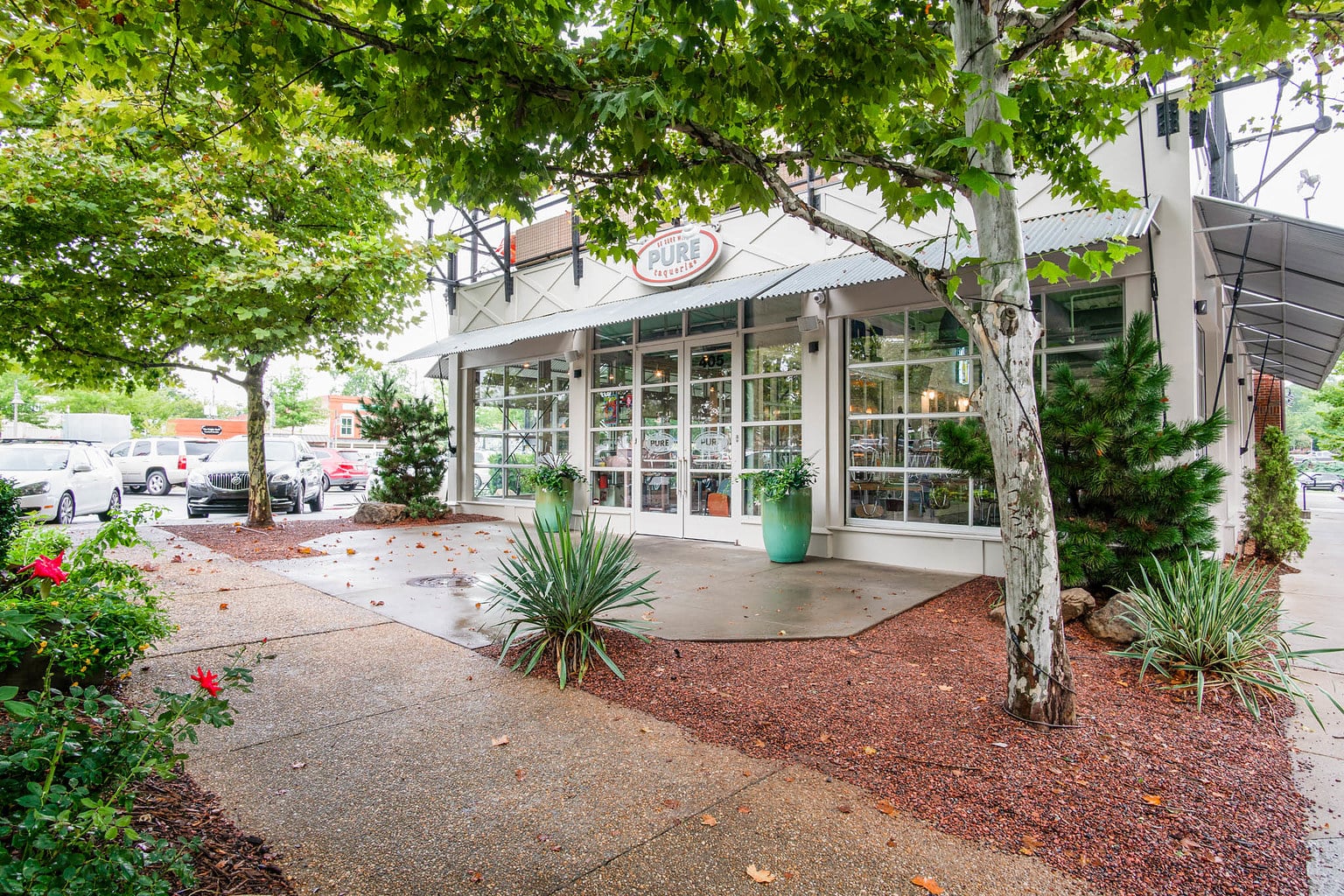
The core of downtown Woodstock runs along Main Street and the Elm Street district, with shops, restaurants, and the amphitheater at the city's downtown park drawing steady evening and weekend activity. Living a few blocks from that means the walkable errand is real: dinner, coffee, a concert, the farmers market. It also means you hear the concerts, and parking on event nights is a shared resource.
Trail access is part of the appeal and a genuine differentiator in Cherokee County. The Noonday Creek Trail runs south toward the Cobb County line, and Olde Rope Mill Park on the Little River carries a mountain biking and hiking network on the north side of town. Together with the downtown core, those give residents a walkable and bikeable radius that most NW Metro Atlanta submarkets do not have.
Practically speaking, the area functions on a spectrum. Within a handful of blocks you get true walkability and the density that comes with it. A mile or two out you get more conventional subdivisions, more parking, larger lots, and a two-minute drive instead of a ten-minute walk. Both are Woodstock. They are not the same product. My Woodstock area page covers the wider market, and my guide to downtown Woodstock's shops, dining, and amphitheater covers the core itself. The city's visitor site keeps a current event calendar, which is worth checking before you tour on a weekend.
What types of homes are near downtown Woodstock?
The housing mix changes noticeably with distance from Main Street:
- Attached and townhome product: concentrated closest to the core, typically low-maintenance with small or no private yard.
- Cottage-scale detached homes: smaller footprints on modest lots, some in newer infill communities, some older and renovated.
- Established mid-century and later subdivisions: just outside the core, conventional lots, mature trees, varied condition.
- Larger master-planned areas: Towne Lake to the west offers scale, amenities, and larger lots with a drive to downtown.
- Newer construction: spread through Woodstock and toward Holly Springs, generally on smaller lots than comparable homes built a generation earlier.
- Age-restricted communities: Cherokee County has HOPA-qualified 55+ options in and around Woodstock, several of them single-level.
If low-maintenance single-level living is the priority, my page on 55+ communities in Woodstock covers the age-restricted options specifically, and the 55+ active adult guide explains how age-restricted communities work in Georgia.
How does downtown Woodstock compare with other walkable NW Metro Atlanta downtowns?
Woodstock is one of several walkable cores in the area, and they differ in character and in what the surrounding housing looks like.
| Downtown | County | Nearby housing character |
|---|---|---|
| Woodstock | Cherokee | Newer infill, townhomes, cottage-scale |
| Marietta Square | Cobb | Historic districts, wide age range |
| Downtown Acworth | Cobb | Lake-adjacent, smaller scale |
| Downtown Canton | Cherokee | Older stock, ongoing redevelopment |
| Downtown Kennesaw | Cobb | Compact core, established subdivisions |
Woodstock's core has been built out more recently than Marietta's or Canton's, which shows up in the housing: more attached product, more newly constructed infill, fewer century-old houses. If period architecture matters to you, Marietta Square and Canton offer more of it. If low-maintenance and newer construction within walking distance matter more, Woodstock has more of that. My area guides break each one down.
What should buyers evaluate before buying near a downtown core?
Downtown proximity is a lifestyle purchase, and the things that surprise people afterward are predictable enough to check in advance:
- Sound at night: visit on a weekend evening, and ideally during an amphitheater event, not just on a quiet weekday afternoon.
- Parking reality: how many spaces come with the home, where guests park, and what happens during events.
- Traffic patterns: drive in and out at the hours you would actually use, including Friday and Saturday evenings.
- HOA scope: attached and infill communities often carry more governance and higher dues than conventional subdivisions.
- Outdoor space: confirm what is private, what is common, and what you may modify.
- What is next door: ask what adjacent parcels are zoned or planned for; downtown-adjacent land changes use.
- Walk the walk: physically walk the route from the home to Main Street. Distance on a map and distance on foot are different things, especially with grade and crossings.
That last one is the most useful and the most skipped. Before you tour, my home tour checklist is worth a look.
How does downtown proximity affect resale?
Location features that cannot be replicated tend to hold their value better than features that can. A buyer can renovate a kitchen, finish a basement, or add a covered patio. No one can move a house closer to Main Street. That asymmetry is why walkable proximity behaves as a durable attribute rather than a trend.
The practical implication is about buyer pool rather than guaranteed appreciation. Homes in the walkable core appeal to a specific buyer who wants that arrangement and will pay for it, and they appeal less to buyers who want an acre and a three-car garage. When you sell, you are marketing to the first group. That tends to mean a narrower but more motivated pool, which is generally a workable position, especially in a market where inventory in the core is limited by geography.
Density also cuts both ways at resale. In an attached community, several similar units listing at the same time creates internal competition that a detached home on a unique lot does not face. Ask how many units of your floor plan exist and how many have sold recently before you assume your unit is distinctive. My seller resources go into positioning, and a valuation is the place to start when you are ready.
What does the commute picture look like?
I-575 is the main artery, feeding into I-75 south of town, which puts Kennesaw, Marietta, and the Cumberland area within a reasonable reach on a normal morning. GA-92 runs east and west, connecting toward Roswell and Alpharetta on one side and Acworth on the other. Towne Lake Parkway and Main Street handle the local load.
The honest caveat is that I-575 and I-75 both back up during peak periods, and Woodstock's downtown streets slow considerably during events. If your commute runs south, drive it before you buy. If you work from home or your commute runs local, downtown proximity is a much easier decision. Cherokee County's continued growth means the corridors matter more each year, which is another argument for buying near what you use rather than driving to it.
Frequently Asked Questions
How walkable is downtown Woodstock from surrounding neighborhoods?
It varies sharply by a few blocks. Communities immediately adjacent to Main Street and the Elm Street district are genuinely walkable, and the trail network extends that range for walking and biking. Neighborhoods a mile or more out are typically drive-to, even when they feel close on a map. Walk the specific route from any home you are considering.
Does living near the amphitheater mean noise?
Within a few blocks, yes, on event nights. Whether that reads as a benefit or a drawback is personal, and it is the single condition I most encourage buyers to test in person before making an offer. Check the city's event calendar and visit during a scheduled show.
Are there 55+ communities near downtown Woodstock?
Cherokee County has HOPA-qualified age-restricted communities in the Woodstock area, and several offer single-level plans and low-maintenance yards. Availability and community rules change, so verify current details with each community. My page on 55+ communities in Woodstock covers the options in more detail.
What is the mix of townhomes versus detached homes near the core?
Attached and townhome product is concentrated closest to Main Street, with detached homes becoming the norm as you move outward. Newer detached homes near the core tend toward cottage-scale footprints on smaller lots. Larger lots generally require moving west toward Towne Lake or north toward Holly Springs and Canton.
How far is downtown Woodstock from Marietta and Kennesaw?
Both are a short drive down I-575 toward the I-75 interchange, with Kennesaw the closer of the two. Actual drive time depends heavily on the hour, since both interstates carry heavy peak-period volume. Drive your specific route at your specific time before deciding.
Considering a move to Woodstock?
The right spot in Woodstock depends on how much you value walking distance against lot size, and that is a conversation worth having before you start touring. I work Cherokee and Cobb counties daily and can help you weigh the trade. Browse my Woodstock guide, view current listings, or reach out to talk it through.
Marna Friedman is a licensed REALTOR® with Atlanta Communities Real Estate Brokerage serving NW Metro Atlanta. Community details, amenities, HOA rules, and availability change; verify current details with each community and the City of Woodstock. Information is deemed reliable but not guaranteed. Equal Housing Opportunity.
Check out this article next