Home Maintenance · NW Metro Atlanta
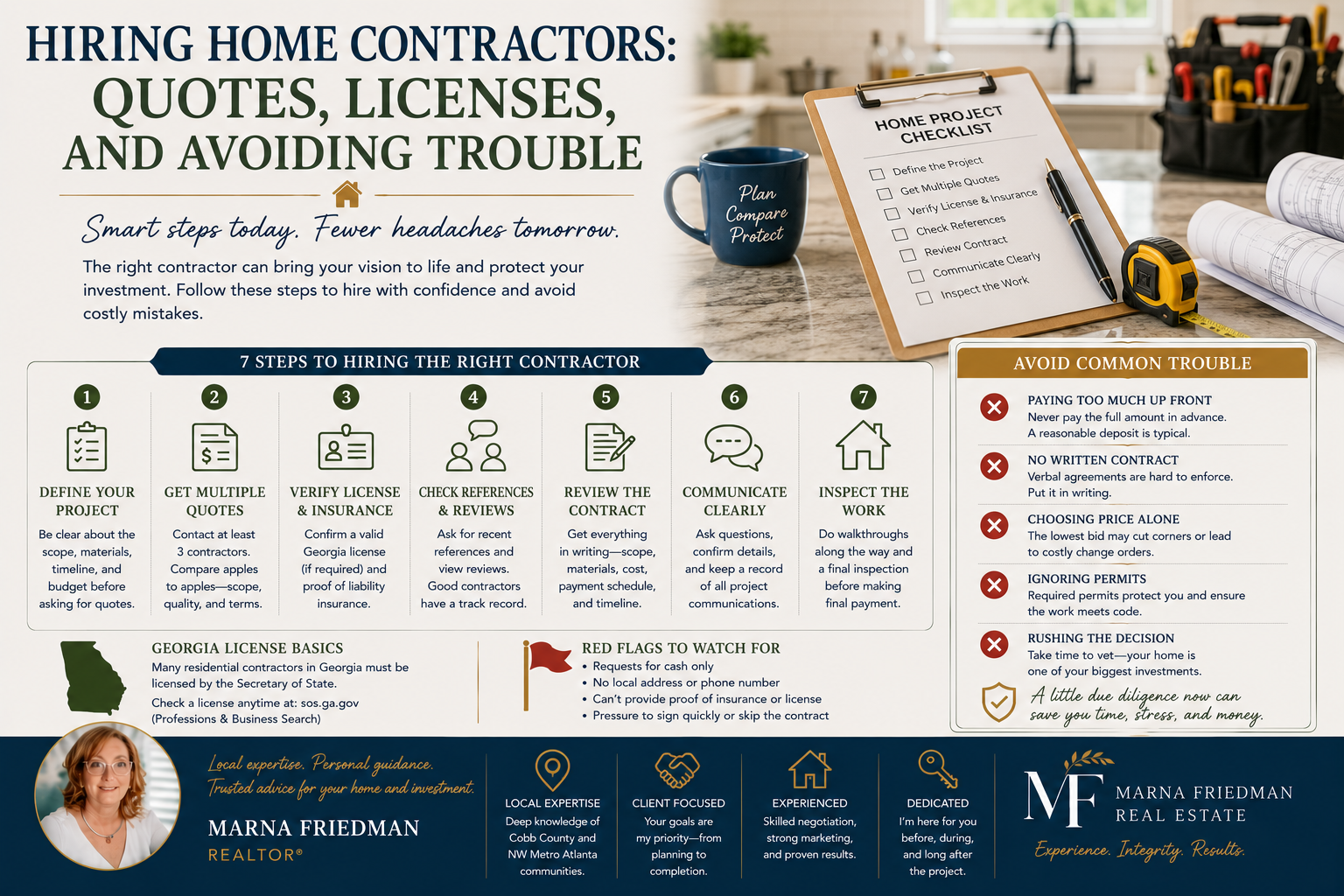
Hiring a contractor well comes down to a repeatable process: gather two or three comparable quotes built from the same scope of work, verify licensing where Georgia requires it and insurance always, check references and recent work, put the agreement in writing with a payment schedule tied to progress, and never pay large sums up front. Homeowners who follow that sequence rarely end up in contractor horror stories; nearly every horror story I hear skipped at least two of those steps.
Every homeowner hires eventually, for the roof, the HVAC, the deck, the storm damage, and the seasonal checklists I publish all end at the same doorstep: at some point, you pick the professional. This guide is the hiring half of home maintenance, written for the projects NW Metro Atlanta homes generate, and it applies equally whether you are maintaining a home you love or preparing one for market.
Key Takeaways
- Write the scope of work yourself, even simply, so every quote prices the same job; unpriceable scopes create uncomparable quotes.
- Georgia requires state licensing for general and residential contractors above certain project thresholds and for trades like electrical, plumbing, and HVAC; verify through the state's licensing board, and require proof of insurance regardless.
- Compare quotes on scope, materials, and terms, not the bottom line alone; the cheapest number is often pricing a different job.
- Structure payments to follow progress, with a modest deposit at most and the final payment after completion and your walkthrough.
- Pressure, cash-only demands, no written contract, and door-to-door storm chasers are the classic warning signs; any one of them is reason enough to pass.
"After every hail season along Cobb's I-75 corridor and out through Paulding, the storm chasers arrive before the adjusters do. The homeowners with a vetted roster and a written-scope habit never end up in the horror stories."
Marna Friedman, REALTOR®, Atlanta Communities
How do you get quotes you can actually compare?
Start by writing the scope before calling anyone: what you want done, where, with what outcome, and anything you already know about materials or constraints. It does not need trade language; "replace the rotted fascia and gutter run on the back of the house, match existing color, haul away debris" is a scope. Handing the same written scope to each contractor is the single trick that makes quotes comparable, because otherwise each bidder prices their own interpretation and the spread tells you nothing.
Then gather two or three bids for meaningful projects, from contractors sourced better than a search ad: neighbors' recent projects, your agent's vendor list, community recommendations with specifics attached, and trade referrals, the roofer your inspector respects, the electrician your HVAC company calls. When quotes arrive, read past the totals: what materials and grades are specified, what is excluded, who pulls permits where required, how long the work takes and when it can start, and what warranty covers labor versus materials. A markedly low bid usually differs in one of those lines, and finding which line is the entire point of comparing.
What should you verify before signing anything?
Licensing first. Georgia licenses general and residential contractors at the state level for projects above statutory thresholds, and separately licenses trades including electrical, plumbing, and conditioned air; verify a contractor's license status directly through the Georgia Secretary of State's licensing search rather than taking a card's word for it. Insurance always, regardless of project size: ask for certificates of general liability and workers' compensation coverage, and understand that an uninsured crew's injury on your property can become your problem. Permits are part of the same conversation, real projects in every local jurisdiction require them for structural, electrical, plumbing, and mechanical work, and a contractor who proposes skipping permits to save time is proposing that you hold the risk.
Then check the human record: references from projects like yours completed recently, at least one you can see or discuss in detail; how long the company has operated under its current name, because serial renaming is its own signal; and a search of reviews weighted toward patterns rather than any single complaint. Ten minutes of verification eliminates the majority of bad outcomes before a dollar moves.
What belongs in the agreement and payment structure?
| Element | What good looks like | Why it matters |
|---|---|---|
| Written contract | Scope, materials, price, timeline, and both parties' details | Verbal agreements resolve nothing later |
| Deposit | Modest, commonly tied to material orders; never most of the price | Large upfront payments remove the incentive to finish |
| Progress payments | Tied to completed milestones you can see | Money follows work, not promises |
| Change orders | Written and priced before the change happens | Prevents the drifting final bill |
| Final payment | After completion, cleanup, your walkthrough, and any permit finals | Your last and best leverage for punch items |
| Warranty terms | Labor and materials coverage stated in writing | Defines who returns when something fails |
On larger projects, two additions earn their paperwork: lien waivers as payments are made, so subcontractors and suppliers the contractor owes cannot look to your property, and a retainage-style final holdback agreed up front. Neither is adversarial; established contractors work with both routinely, and their comfort with the structure is itself a good sign.
Which warning signs should end the conversation?
- Pressure and urgency: today-only pricing, or a push to sign before you can compare. Legitimate work survives a comparison.
- Cash only, or large upfront demands: both remove your recourse and their incentive.
- No written contract offered, or reluctance to put the discussed scope on paper.
- Door-to-door storm solicitation: after hail and wind events, traveling operations canvass hard-hit neighborhoods; some are legitimate, but the pattern carries enough trouble that unsolicited storm knocks deserve extra verification, not less. Involve your insurer directly on storm claims and choose your own contractor.
- Vague materials and allowances: "builder grade" and unpriced allowances are where quotes drift after signing.
- No license where one is required, no insurance certificates, or excuses about both. This one is not a judgment call.
None of these signs requires certainty about intent; each is simply a risk you do not have to accept when the process above produces vetted alternatives.
How do you be a good client and keep the relationship working?
The best outcomes are collaborative. Be reachable for decisions, make selections on time, and keep changes inside the change-order process rather than the driveway conversation. Walk the work at milestones with the contract's scope in hand, raise concerns early and specifically, and document the project, photos before, during, and after, invoices, and warranty papers filed together. That file joins the maintenance log I recommended in the year-round maintenance calendar, and it pays twice: once in warranty enforcement, and again at sale time, when documented professional work answers buyer and inspector questions before they are asked, exactly the effect described in maintenance that pays off before selling.
And when you find good ones, keep them. A roster of proven professionals, the HVAC company that knows your system, the handyman who returns calls, the roofer from the last storm, is one of homeownership's quiet assets, and sharing it is half of what neighbors are for. My clients ask for my vendor list constantly; building your own is the long-term version of everything in this guide.
Contractor work often follows an inspection or precedes a sale; how home inspections work and the first-time seller checklist connect those dots.
Frequently Asked Questions
How many quotes should I get for a home project?
Two or three comparable quotes for meaningful projects, built from the same written scope. For small repairs with a proven vendor, one trusted quote is often reasonable.
How do I verify a contractor's license in Georgia?
Through the Georgia Secretary of State's professional licensing search, which covers state-licensed contractors and trades. Verify the license is current and matches the company you are hiring.
How much deposit is normal for home work?
Modest and purpose-tied, commonly connected to material orders, with the balance following progress. Be wary of any request for most of the price before work begins.
Do small projects need permits?
Permit requirements are set by your local jurisdiction and typically cover structural, electrical, plumbing, and mechanical work regardless of project size. When in doubt, a call to the local permitting office answers it in minutes.
What should I do about door-to-door storm repair offers?
Take the flyer, then verify independently: involve your insurer on any claim, get comparison quotes, and check licensing, insurance, and local references before signing anything. Choose your contractor; do not be chosen.
What if a project goes wrong mid-stream?
Document the issues, raise them in writing against the contract's scope, and pause payments tied to incomplete milestones while you resolve them. Escalation paths run from negotiation to the remedies in your contract; an attorney can advise on significant disputes.
Good contractors are out there in numbers, and the process in this guide is how you reliably end up with one of them. Keep the file, keep the roster, and your home's next decade of projects gets easier each time. If you are lining up work ahead of a sale anywhere in NW Metro Atlanta, my seller resources cover what is worth doing, and you can reach out for the vendor conversation anytime.
Marna Friedman is a REALTOR® with Atlanta Communities serving NW Metro Atlanta. Licensing requirements, permit rules, and consumer protections vary and change; verify current requirements with the relevant Georgia and local authorities. This article is general information, not legal advice. Equal Housing Opportunity.
Check out this article next