Luxury · NW Metro Atlanta
In a luxury home purchase, insurance is a transaction milestone before it is anything else: high-value coverage can take longer to arrange than a standard policy, lenders and closing attorneys require proof of it before funding, and questions about a home's insurability are legitimate due diligence on the property itself. Handled early, all of it is routine; handled in the final week, it is the avoidable fire drill of the luxury closing. So the planning rule is simple: start the insurance conversation when due diligence starts, and let your insurance professional run their process with time to spare.
Let me be direct about the lens here, because it matters. I am a REALTOR®, not an insurance agent, and nothing in this post is insurance advice: what coverage your home needs, in what amounts, on what terms, is the professional territory of a licensed insurance advisor, and yours should be consulted on all of it. What I know from my side of the table is where insurance intersects the transaction, the timelines, the requirements, the diligence questions, and the preparation, and that is the map this post draws.
Key Takeaways
- Start the insurance conversation during due diligence: high-value coverage can involve underwriting steps and lead time a standard policy never needs.
- Closings wait for proof of insurance; your lender and closing attorney will require it, so the binding timeline belongs on the transaction calendar.
- A home's insurability, its claims history, roof and systems condition, water exposure, is fair due diligence, and your inspector's findings feed the insurance conversation.
- Bring your insurance agent a complete picture of the property's features; they determine what needs covering and how. That call is theirs, not your REALTOR's.
- Insurance estimates belong in carrying-cost math when comparing finalist homes; the differences between properties can be material.
"Insurance belongs at the start of a luxury purchase, not the final week. From Lake Allatoona's Cherokee shoreline to the estate lots outside Dallas, the smoothest closings treat the policy conversation as due diligence, and leave the coverage decisions to the professionals who make them."
Marna Friedman, REALTOR®, Atlanta Communities
Why does insurance need a head start in a luxury purchase?
Because at this tier, arranging coverage is a process rather than a phone call. Insurers writing high-value homes commonly do more work before binding a policy, detailed questions, sometimes an inspection or appraisal of the property, review of its features and history, and that work takes calendar days the final week of a transaction does not have. Meanwhile the transaction itself has hard insurance dependencies: a financed purchase cannot fund without proof of coverage in the lender's hands, and your closing attorney will be tracking it among the pre-closing requirements, one of the timeline threads I walk through in the luxury closing process.
My role in this is coordination, not coverage: I put insurance on the transaction calendar at contract, connect clients who need introductions with qualified insurance professionals, make sure the property information they request flows quickly, and watch the binding timeline the way I watch every other closing dependency. The coverage itself, program, provisions, limits, is designed between you and your advisor. The transactions that go smoothly are the ones where that design work started with weeks in hand, which is a scheduling achievement anyone can have for free.
What does insurability due diligence look like?
Alongside "do we want this home" sits a quieter question: "how does this home insure?" It is legitimate diligence, and several threads feed it. The home's claims and repair history, to the extent disclosure and your questions reveal it, is information your insurance advisor will want. The inspection's findings on roof age and condition, systems, and any water evidence, per what is different about luxury inspections, inform the same conversation, which is one more reason inspection and insurance both belong inside the due diligence window where their answers can still shape the deal. And the property's situation, wooded exposure, water features, whether flood coverage is even a question for this parcel, is exactly the kind of thing to raise with your advisor early, because some answers carry cost or process implications worth knowing before you are committed.
For buyers comparing finalist properties, an insurance estimate per home is honest carrying-cost math, alongside taxes, any club or association dues, and the rest of the monthly reality. Two homes at similar prices can insure differently enough to notice, differing construction, features, and exposure see to that, and knowing the number before choosing beats discovering it after. Your insurance professional can rough-estimate candidates quickly; all your agent has to do is make sure someone asks.
Who handles what, and when?
| Transaction stage | Insurance task | Who owns it |
|---|---|---|
| Comparing finalists | Rough coverage estimates per candidate home | Your insurance professional, prompted early |
| Contract signed | Insurance goes on the closing calendar; introductions made if needed | You and your REALTOR® |
| Due diligence | Insurability questions; inspection findings shared; coverage designed | Your insurance professional, fed by the whole team |
| Underwriting | Insurer's questions, and any inspection, scheduled and answered | You and your insurance professional |
| Before closing | Coverage bound; proof delivered to lender and closing attorney | Insurance professional; tracked by all |
| After closing | Reviews and updates as the home changes | You and your insurance professional, on their cadence |
The table is the whole philosophy: every insurance decision sits with you and a licensed advisor, and every insurance deadline sits on the transaction calendar where your REALTOR® can keep it honest. Neither substitutes for the other, and the luxury closings that finish calmly are the ones where both jobs got done.
What should you bring your insurance agent about the home?
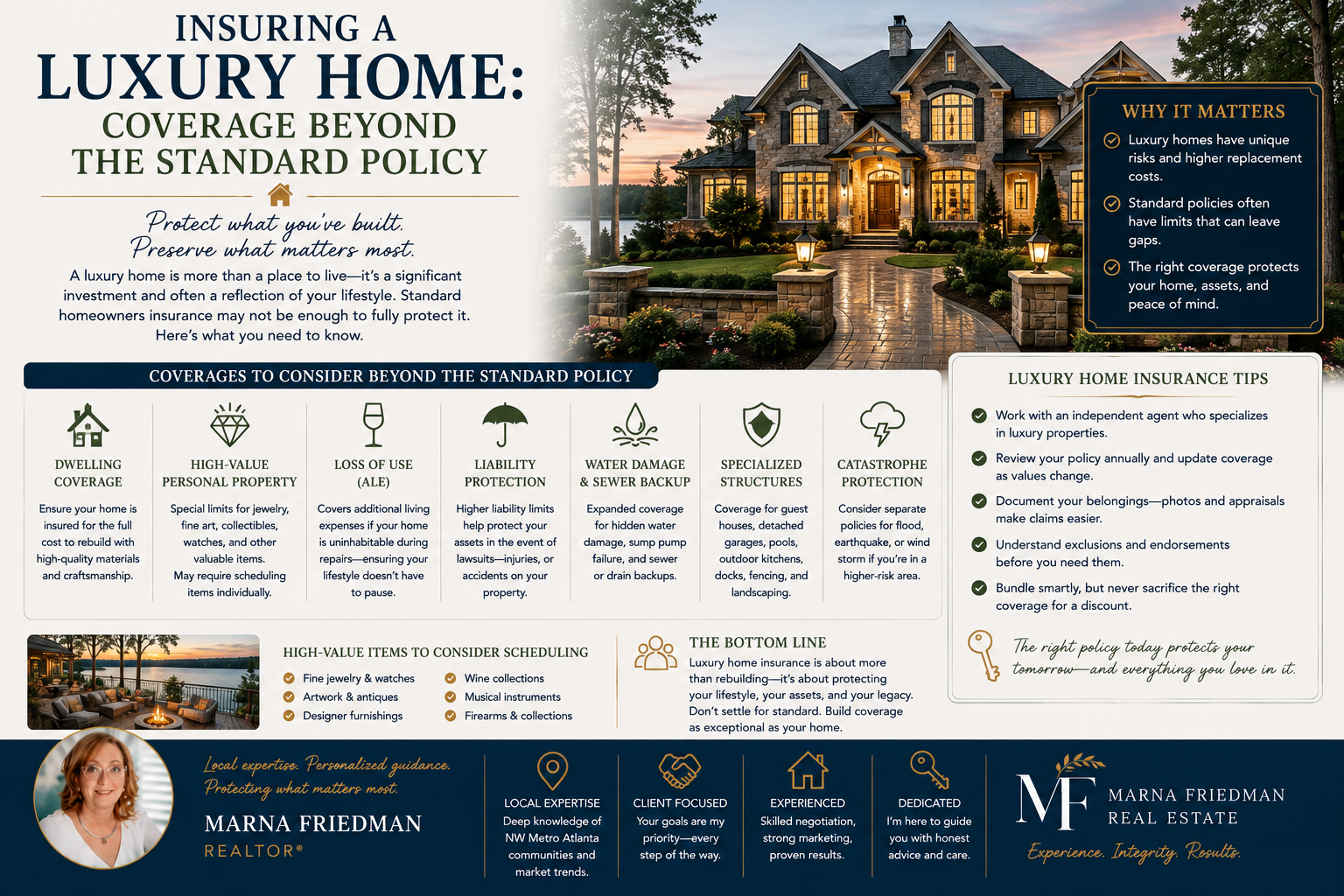
A complete picture, because features they do not know about are features nobody addressed. Walking a luxury property, the list writes itself: pools, spas, and water features; outbuildings and detached structures; automation, security, and the integrated technology covered in smart home systems; generators, elevators, and specialty mechanical plants; finished spaces with rare or imported materials; significant landscape and hardscape investment; and on estate parcels, the acreage features, wells, and site elements that acreage living involves. In our area specifically, it is worth telling your advisor about wooded exposure and any water adjacency, from Cobb's mature canopies to Cherokee's lake-adjacent streets, so storm, tree, and flood questions get asked on purpose.
What any of that means for coverage, which items need what treatment, whether valuables should be separately addressed, what liability picture fits your life, is precisely where my expertise ends and your advisor's begins, and I say that to clients in exactly those words. The REALTOR®'s contribution is the complete feature list and the property knowledge; the insurance design belongs to the professional licensed to do it. Bring them everything, ask what they need, and let them build.
What about documentation and the selling side?
One habit serves both worlds: the documented home. The systems binder, maintenance record, improvement history, and photo record I already push for luxury owners, the same package from preparing a luxury home for market, is also the raw material insurance conversations and any future claims draw on, and your insurance advisor can tell you what else to keep and how current to keep it. Owners who maintain the file do their future selves two favors at once, and it is the rare piece of insurance-adjacent advice a REALTOR® can give without leaving her lane, because it is really resale advice that happens to double.
Sellers have their own short insurance list, and it is genuinely short: keep your coverage fully in force through closing day, since the home is yours until the sale funds, and treat your documentation as part of the sale, because the history that served your policy also answers buyer diligence. Questions about coverage during a sale, vacancy, timing, anything beyond keep-it-in-force, go to your insurance professional like everything else; your agent's job is making sure the question gets asked before the calendar makes it urgent.
Frequently Asked Questions
When should insurance enter a luxury home purchase?
At the start of due diligence. High-value coverage can involve underwriting steps and lead time, closings require proof of coverage, and insurability findings are useful diligence on the property itself.
Why does high-value home coverage take longer to arrange?
Insurers at this tier commonly do more pre-binding work, detailed questions and sometimes a property inspection or appraisal. Your insurance professional can tell you the realistic timeline for a specific home; the transaction just needs to allow for it.
Is a home's insurability part of due diligence?
Yes. Claims history, roof and systems condition, and water or exposure questions all inform whether and how a home insures, and your inspector's findings feed that conversation while contract protections still apply.
Can insurance costs differ between similar luxury homes?
They can, enough to belong in carrying-cost comparisons between finalists. Ask your insurance professional for rough estimates per candidate before choosing, alongside taxes and other ownership costs.
What should I tell my insurance agent about the home?
Everything: pools and water features, outbuildings, specialty systems and technology, finished spaces with rare materials, acreage elements, and the property's exposure. They determine what needs covering and how; completeness is your half of the job.
Who decides what coverage a luxury home needs?
A licensed insurance professional, working with you. Your REALTOR® coordinates timing, introductions, and property information, and should be clear, as I am, that coverage decisions are not real estate advice.
Insurance done right in a luxury purchase is mostly a calendar discipline plus the right professional in the seat, and both are easy to arrange when the conversation starts early. If a significant purchase or sale in NW Metro Atlanta has you assembling the team, my luxury homes guide maps the territory, and you can reach out for the introductions and the timeline.
Marna Friedman is a REALTOR® with Atlanta Communities serving NW Metro Atlanta. She is not an insurance agent, and nothing in this article is insurance advice: coverage needs, products, and provisions vary and are matters for a licensed insurance professional; please consult yours. Information is deemed reliable but not guaranteed. Equal Housing Opportunity.
Check out this article next