
Luxury · NW Metro Atlanta
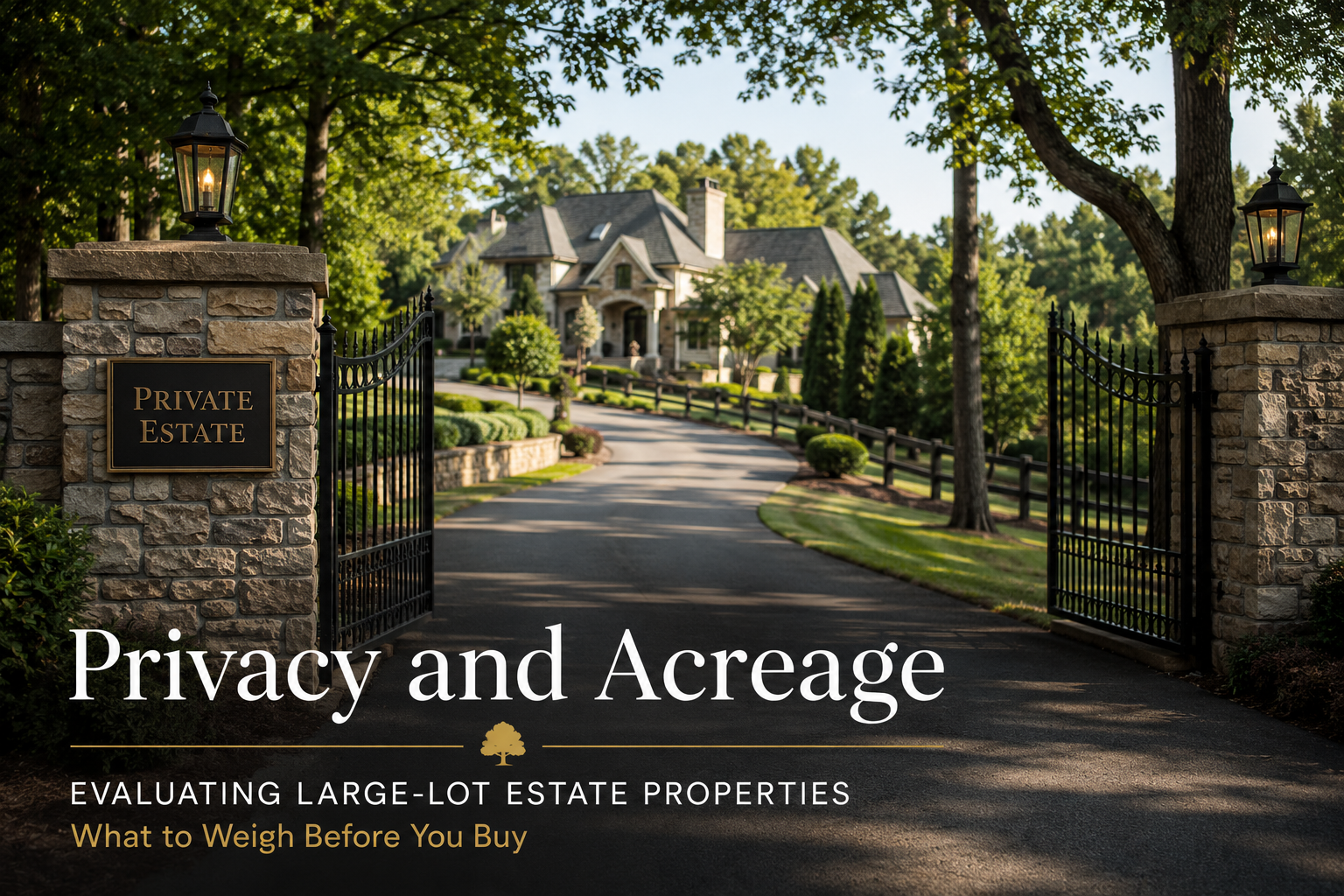
Evaluating a large-lot estate property means weighing three things: the privacy and setting the land actually delivers, the systems and infrastructure that come with acreage (access, boundaries, utilities, sometimes well and septic), and the ongoing upkeep of both the home and the grounds. A big lot is not automatically private, and privacy is not automatically low maintenance. The properties that hold both their appeal and their value are the ones where the land, the home, and the systems all work together and match how the owner wants to live. This overview is meant to help you think through those factors before you fall for a view or a driveway.
Here is a practical framework for weighing large-lot estate properties: what to check on the land, on the systems, on the home, and on the upkeep, so the decision is informed rather than emotional.
Key Takeaways
- Privacy depends on setback, topography, tree line, and neighbors, not just acreage.
- Acreage brings its own infrastructure: access, boundaries, utilities, sometimes well and septic.
- Grounds and outbuildings require ongoing upkeep beyond the home itself.
- Land use, zoning, and easements can shape what you can and cannot do.
- Match the property to how you actually want to live before you commit.
What actually creates privacy on a large lot?
Acreage is often assumed to equal privacy, but the two are not the same. A ten-acre property along a busy road with an open front yard can feel less private than a three-acre property with dense woods and a long drive. When you evaluate a property, look at the specifics that actually deliver seclusion:
- Setback from the road: how far the home sits from public road frontage.
- Topography: hills, valleys, and orientation that shield or expose the home.
- Tree line and buffers: mature trees, hedges, and buffers that block sight lines.
- Neighboring uses: what is adjacent, quiet residential, farmland, another estate, commercial.
- Access: a long private drive, gate, or single-owner shared drive.
- View lines: what is visible from the primary living areas and outdoor spaces.
The right way to check privacy is to walk the property, ideally at different times of day, and look and listen from the actual living spaces. A property that photographs well can feel very different in person.
What comes with acreage beyond the home?
Acreage typically brings its own infrastructure and systems, which shape both upkeep and daily life. A few of the categories to understand for any large-lot property:
- Access: the drive, its condition, gate systems, and any shared-use arrangements.
- Boundaries: where the property lines actually are, whether they are surveyed and marked, and any fencing.
- Utilities: public water and sewer, or well and septic; underground versus overhead electric; internet options.
- Drainage and grading: how water moves across the land, any low areas or erosion, retaining walls.
- Outbuildings: garages, guest houses, barns, sheds, pool houses, each with its own condition and maintenance.
- Grounds: lawn, gardens, hardscape, water features, irrigation, and their upkeep.
- Land use rules: zoning, HOA, easements, deed restrictions that shape what you can build or do.
These are why acreage due diligence looks different from a standard home. Each of these categories can be simple or complex depending on the property; a well-set-up estate with public water, sewer, and clear surveyed boundaries is much lower ongoing work than one with a private well, septic field, seasonal drainage issues, and unresolved easements. Neither is inherently wrong for the right owner, but knowing what you are actually buying, and what it will ask of you over time, is essential before making the offer. My Luxury Homes Guide covers more of the estate-tier picture, and it is worth doing a thorough inspection that includes the acreage-specific systems.
How do private land, gated estates, and gated communities compare?
Large-lot living can look several different ways, each with its own trade-offs. The table summarizes the main options.
| Setting | Advantages | Trade-offs |
|---|---|---|
| Private acreage, no HOA | Maximum autonomy | You handle everything |
| Gated private estate | Security, access control | Higher upkeep, cost |
| Gated luxury community | Shared amenities, staffing | HOA rules and dues |
| Lakefront estate | Water access, view | Shoreline rules, dock permits |
| Rural or foothill acreage | Space and setting | Distance, well and septic |
Explore related options through my gated communities and Dallas luxury homes resources.
What are the ongoing upkeep considerations?
Upkeep on a large-lot property is real and continuous, and it is one of the most important honest conversations to have with yourself before buying. Common categories:
- Grounds and landscaping: mowing, trimming, irrigation, seasonal care, and any specialty features like formal gardens or water features.
- Trees: maintenance, storm damage response, removal of dead or hazardous trees on acreage.
- Drive and access: a long drive requires resurfacing over time; gate systems need service.
- Outbuildings and hardscape: everything you own is something to maintain.
- Pool, spa, and water features: equipment, chemistry, and structural upkeep.
- Well and septic (where applicable): regular service and periodic inspection.
- Security: cameras, monitoring, and access management on larger properties.
Many estate owners rely on service teams for all or part of this. Whether you do the work yourself or hire it out, it is worth budgeting realistically before committing, since ongoing upkeep is a meaningful part of the total cost of a large-lot property.
What should you check before making an offer?
Beyond the home itself, a few property-specific items belong in your due diligence:
- Survey: current boundary survey showing lines, easements, and encroachments.
- Title and easements: what rights others may have across the property.
- Zoning and land use: what the current designation allows and any restrictions.
- HOA or deed restrictions: if applicable, what they permit and prohibit.
- Well and septic tests: where applicable, current condition and function.
- Utility service: capacity for internet, power, and any needed upgrades.
- Access: right-of-way, drive maintenance responsibility for shared drives.
- Inspection scope: a general inspection plus specialty inspections for pool, structure, outbuildings, and any complex systems.
Estate properties reward thorough due diligence, since the systems and features are more numerous and more specific. Building enough time into the contract for that evaluation is essential, and a shorter, standard resale due diligence period is usually too tight for the scope of what needs to be reviewed on a large-lot property. I help clients scope and manage this process on high-end purchases; for more on estate-tier due diligence, see my luxury home inspections post.
How do you decide if a large-lot estate fits you?
Honestly weighing how you want to live is the best filter. A few questions worth sitting with:
- How much land do you actually want to use? More acreage is a feature only if you enjoy it.
- Are you willing to manage the upkeep and coordinate services?
- Is the privacy the land offers the real appeal, and does the specific property deliver it?
- How much time do you spend at the home? A property you barely see is a lot to maintain.
- Do you want gated community amenities, or private autonomy?
The right answer is highly individual. A property that fits your life is one you enjoy; one that does not can quickly feel like a job. I help clients think through these questions before making offers on estate properties. Explore my Luxury Lifestyle resources to start.
Frequently Asked Questions
Does more acreage mean more privacy?
Not automatically. Privacy depends on setback, topography, tree line, neighboring uses, and access, not just size. Some smaller lots offer more real privacy than larger ones. Walk the property to see what it actually delivers.
What systems come with acreage?
Depending on the property: the drive and gate, boundaries and fencing, well and septic where applicable, drainage and grading, outbuildings, grounds and irrigation, and land-use rules. Each carries its own inspection and upkeep considerations.
How is due diligence different for estate properties?
Broader. Beyond the home, you evaluate the land: survey, title and easements, zoning, HOA rules where applicable, well and septic where relevant, utilities, access, and specialty inspections for pool, structure, and outbuildings.
Is a gated community or private acreage better?
Neither is universally better; they suit different priorities. Gated communities offer shared amenities and staffing, private acreage offers autonomy. Weigh what you want your daily life to look like.
What are the ongoing costs of a large-lot property?
Beyond mortgage and insurance: grounds and landscaping, tree work, drive and gate upkeep, outbuildings and hardscape, pool and water features, well and septic where applicable, and security. Budget realistically before committing.
Considering an estate property?
A large-lot home rewards clear thinking about privacy, systems, and upkeep before you commit. I help clients evaluate acreage properties comprehensively and match the setting to how they want to live. Read my Luxury Homes Guide, explore Luxury Lifestyle resources, or reach out to talk it through.
Marna Friedman is a licensed REALTOR® with Atlanta Communities Real Estate Brokerage serving NW Metro Atlanta. This article is general guidance, not a valuation, survey, engineering, or land-use opinion; rely on qualified professionals. Information is deemed reliable but not guaranteed and is subject to change. Equal Housing Opportunity.
Check out this article next