
Luxury · NW Metro Atlanta
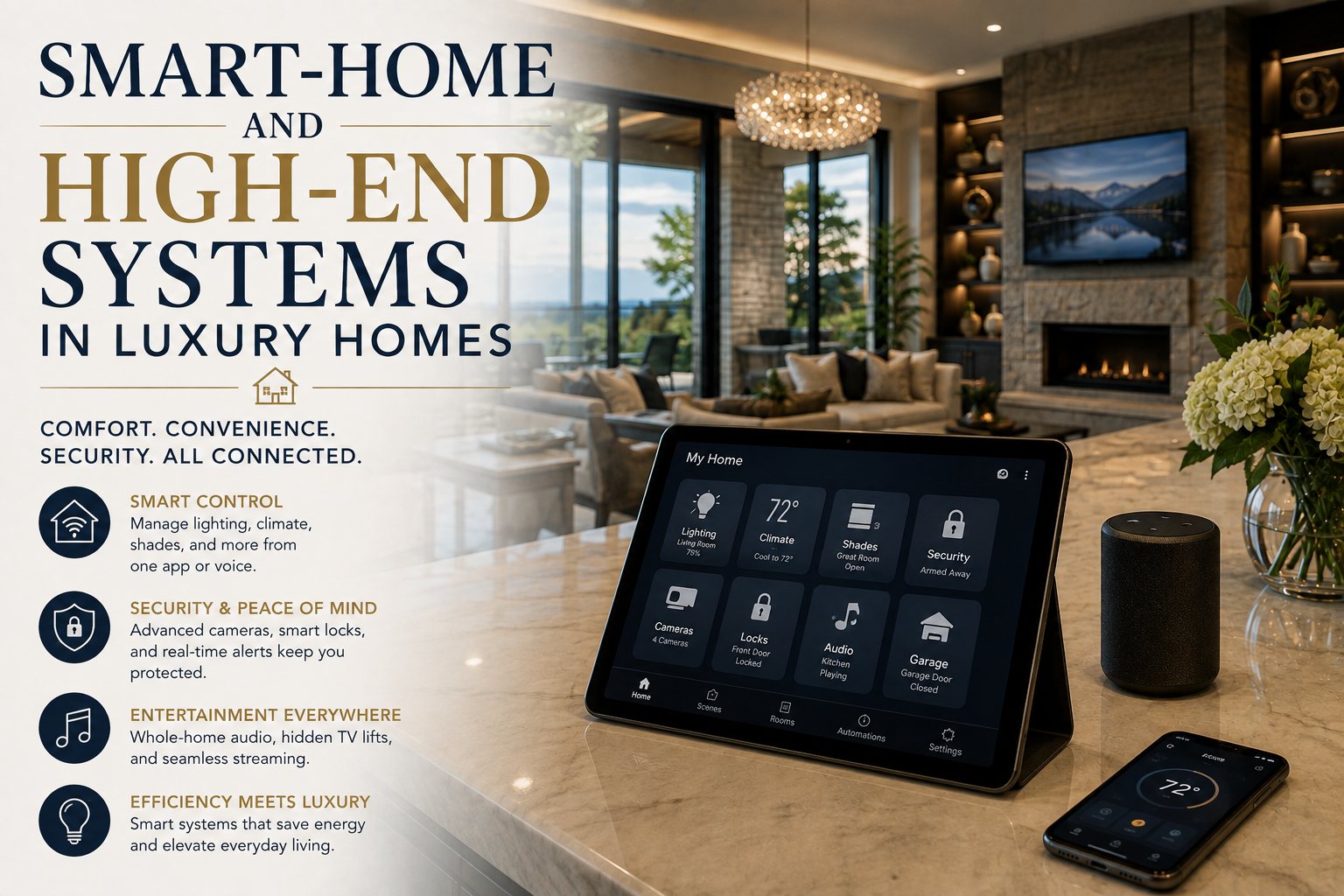
The smart-home systems that add real value in a luxury home are the infrastructure-level ones: integrated lighting and shades, zoned climate control, whole-home audio and network, security with cameras and monitored access, and mechanical monitoring such as leak detection and generator management. Gadgets come and go; wiring, control platforms, and professionally installed systems are what buyers actually pay for.
Estate-tier homes across NW Metro Atlanta increasingly come with serious technology built in, and I see both sides of it: buyers trying to evaluate a house full of systems, and sellers wondering whether their investment will return. Here is how to think about high-end home technology on both sides of the transaction.
Key Takeaways
- Infrastructure beats gadgets: structured wiring, enterprise-grade networking, and professionally integrated control systems hold value; plug-in devices do not.
- The systems buyers use daily, lighting scenes, shades, climate zones, and audio, deliver the most satisfaction per dollar.
- Protective technology (leak detection, generator, monitored security) quietly prevents the most expensive problems.
- Before buying, get documentation: platform, installer, service history, account transfers, and what conveys.
- At resale, systems support value when they are current, documented, and demonstrated; aging proprietary setups can cut the other way.
"In luxury homes across Cherokee and Cobb, from gated golf communities like BridgeMill and Governors Towne Club to estates in Milton, the systems that age best are the ones documented best. The binder is part of the product."
Marna Friedman, REALTOR®, Atlanta Communities
Which systems actually improve daily life?
Start with the ones you touch every day. Integrated lighting control replaces walls of switches with scenes: one touch sets the kitchen for cooking, the terrace for evening, the whole main level for leaving. Motorized shades do the same for glass, which matters in homes with two-story window walls facing the afternoon sun. Zoned HVAC with smart thermostats lets a 6,000-square-foot home condition the spaces in use rather than the whole envelope, and the comfort difference between zones done well and done poorly is obvious within a day of living there.
Whole-home audio, distributed video, and a dedicated media room round out the daily-use tier. All of it rides on the least glamorous system in the house: the network. Structured wiring, wired access points, and a proper equipment rack are what separate a home where everything works from one where the owner apologizes for the Wi-Fi.
What protective systems should a high-end home have?
The technology that saves the most money is the kind you hope never to notice:
- Water leak detection with automatic shutoff. A monitored main valve that closes on an anomaly can turn a catastrophic slab or ceiling loss into a log entry. Some insurers offer credit for it.
- Whole-home generator with automatic transfer. On larger properties, especially those with wells, sump systems, or refrigeration-heavy kitchens, backup power protects the house itself, not just convenience.
- Monitored security and access. Cameras, smart locks or keypads, driveway and gate control, and professional monitoring, integrated into one platform rather than five separate apps.
- Mechanical monitoring. Alerts for HVAC faults, freezer temperature, sump operation, and humidity in wine storage or below-grade spaces.
These systems also feature in a thorough due diligence review, alongside the specialty checks I describe in luxury home inspections.
How do the main system categories compare?
| Category | Daily value | Resale contribution | Watch for |
|---|---|---|---|
| Lighting and shades | High; used constantly | Strong when integrated and current | Discontinued control platforms |
| Climate zoning | High; comfort and efficiency | Strong; expected at this tier | Zones that were never balanced properly |
| Network and wiring | Invisible until absent | Foundation for everything else | Consumer gear serving a large home |
| Audio and media | High for those who use it | Moderate; tastes vary | Aged equipment behind new keypads |
| Security and access | Moderate to high | Expected; smooth transfer matters | Accounts that cannot be transferred |
| Leak, power, monitoring | Low visibility, high protection | Increasingly valued; insurers notice | Sensors installed but never monitored |
What should a buyer verify before closing on a systems-heavy home?
- Identify every platform and its installer. Ask for the integrator's name and whether they will continue service for a new owner.
- Get the documentation. System diagrams, equipment lists, network credentials, and warranty status should convey in writing at closing.
- Confirm account transfers. Monitoring contracts, camera cloud accounts, and control-app ownership must move to you; orphaned accounts are a common post-closing headache.
- Demand a demonstration. Walk the house and operate everything: scenes, shades, zones, audio, gate, generator test cycle. What cannot be demonstrated should be assumed nonfunctional and negotiated accordingly.
- List what conveys. Racks, remotes, wall tablets, mounted displays, and outdoor equipment should appear in the contract, not in a handshake. The same discipline applies to the broader process in my luxury closing guide.
Do smart-home systems help at resale?
They help when three things are true: the systems are current or recently updated, they are documented well enough that a buyer believes they can live with them, and they are demonstrated confidently at showings. A well-run house where lights, shades, and climate respond instantly photographs poorly but shows brilliantly in person.
They hurt when the platform is proprietary and aging, when nobody can produce a service contact, or when half the keypads do nothing. If you are preparing a systems-heavy home for market, a pre-listing service visit from your integrator is one of the highest-return calls you can make; it turns a question mark into a selling feature. For the broader preparation picture, see selling a luxury home and my luxury homes guide.
How should sellers document and hand off a smart home?
If a substantially automated home is heading to market, the systems become part of the listing, and the handoff becomes part of the sale. Start with an inventory: every system and its components, what stays with the home, which services carry subscriptions, and which equipment belongs to a provider rather than the house. Conveying items and subscription obligations belong in the contract explicitly, because "the speakers stay" means different things to different people when the amplifiers live in a rack.
Then build the handoff package a buyer's inspector and integrator will respect: the original installation documentation where it exists, the integrator's contact information and service history, network diagrams or at least a clear map of where the hubs, panels, and equipment racks live, and a plan for credentials. At closing, every account transfers or gets factory-reset and re-created, security systems, cameras, locks, thermostats, network gear, so the buyer starts with clean ownership and the seller exits with no lingering access in either direction. A pre-scheduled visit from the servicing integrator during the buyer's first week is an inexpensive gesture that prevents most post-closing friction.
Sellers should also let the systems help sell the house. A documented, professionally serviced automation package reads as maintenance quality, exactly the signal luxury buyers price, while an undocumented tangle of aging devices reads as a project. Demonstrations during showings should be scripted and brief: lighting scenes, shades, climate, one wow moment, rather than a tour of every app. The goal is a home that feels effortless, because effortless is the entire promise of the category.
Buyers reading this from the other side should simply flip it into a request list: ask for the inventory, the documentation, the integrator's contact, and the credential handoff plan during due diligence, and weigh their presence or absence as the maintenance signal it is. A seller who can produce that package in a day has been running the home well, and the systems you are buying will show it for years. Either way, put the technology on the due diligence list by name, because it is now as much a system of the house as the HVAC it controls.
Frequently Asked Questions
Which smart-home features do luxury buyers ask about most?
Integrated lighting and shades, zoned climate control, robust whole-home networking, and security with cameras and controlled access. Buyers increasingly ask about leak detection and generators as well.
Do smart-home systems increase a home's appraised value?
Appraisers weigh them as part of overall quality and condition rather than line items. Their bigger effect is on buyer demand and confidence, which shows up in offers.
What happens to system accounts when a home sells?
Monitoring contracts, cloud camera accounts, and control-platform ownership must be formally transferred. Build the transfer into the contract and complete it at or before closing.
Are professionally installed systems worth it over DIY devices?
At the estate tier, yes. Professional integration on structured wiring is reliable, serviceable, and transferable. A collection of consumer devices tied to one person's accounts adds little at resale.
Should older systems be upgraded before selling?
Have your integrator service and update what exists, and document everything. Full replacement rarely pays; a functioning, demonstrated, documented system usually does.
Technology should make an exceptional house effortless to live in, and evaluating it well takes the same discipline as evaluating the structure. If you are buying or selling a systems-rich home in NW Metro Atlanta, reach out, or explore current luxury communities and listings to see what is on the market now.
Marna Friedman is a REALTOR® with Atlanta Communities serving NW Metro Atlanta. System capabilities, contracts, and insurance treatment vary; verify specifics with installers, providers, and your insurer. Information is deemed reliable but not guaranteed. Equal Housing Opportunity.
Check out this article next